
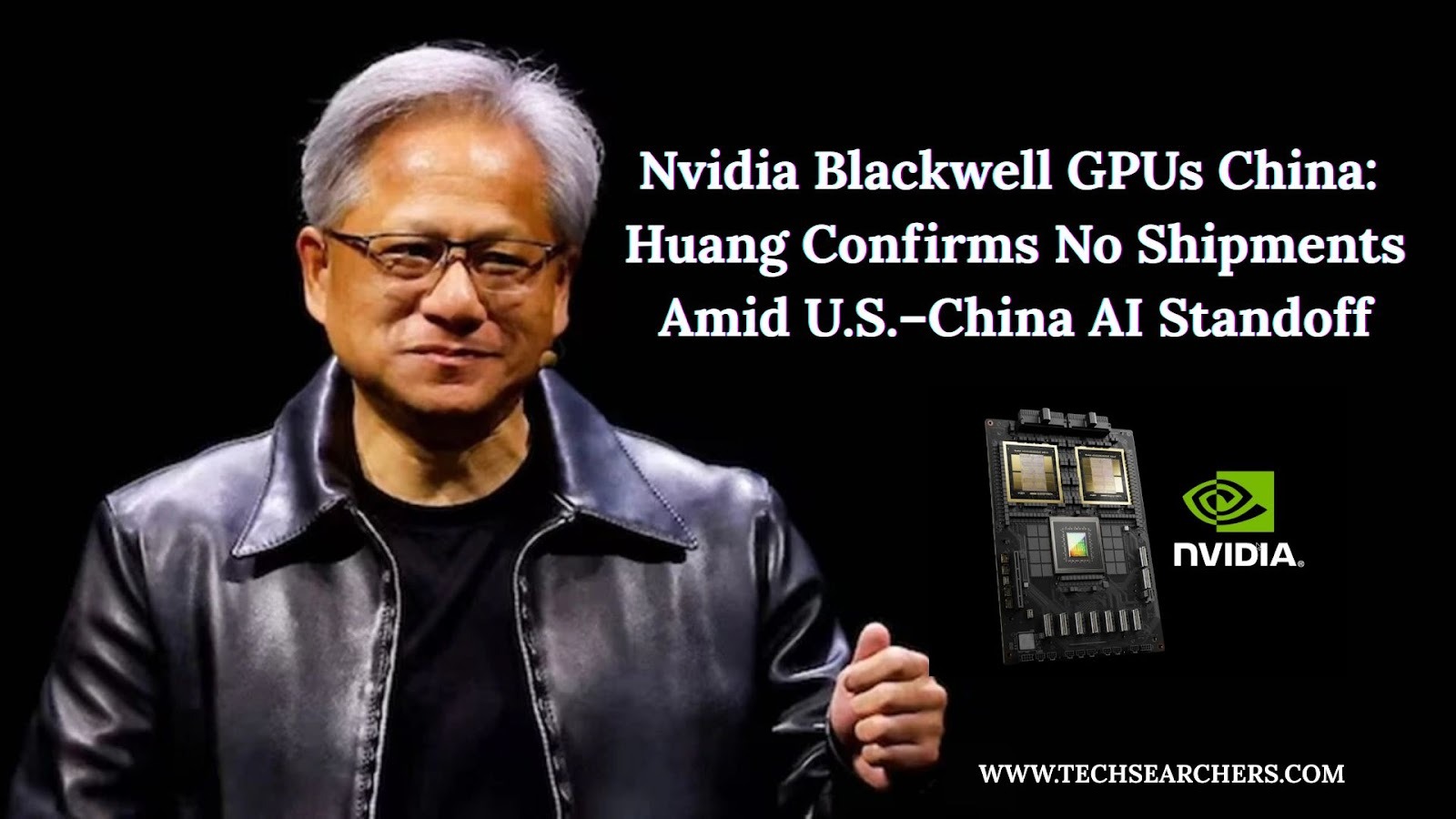
Nvidia CEO Jensen Huang has confirmed that shipments of the company’s powerful Blackwell GPUs to China are not planned, highlighting ongoing U.S. export restrictions and China’s domestic semiconductor policies. Speaking in Taiwan ahead of a TSMC event, Huang stressed that Nvidia is effectively barred from selling its most advanced AI chips—the world’s fastest and most capable GPUs—in the Chinese market. Nvidia’s Blackwell GPUs are designed to accelerate cutting-edge AI workloads, including large language models and advanced machine learning applications, cementing the company’s leadership in AI hardware.
Currently, no Chinese company produces chips matching Nvidia’s Blackwell performance. While firms like Huawei’s HiSilicon and Alibaba’s DAMO Academy are developing high-performance AI chips, they still lag behind Nvidia’s technology. This development underscores the intensifying U.S.–China competition in AI and semiconductor innovation, shaping the global technology landscape.
Key Highlights
- No active discussions regarding Nvidia Blackwell GPUs China shipments.
- U.S. export controls prevent sales of the most advanced AI chips to China.
- China prioritizes domestic silicon, limiting market penetration of Nvidia GPUs.
- Nvidia faces a $50 billion market opportunity blocked due to geopolitical policies.
- Shipments could resume only if Chinese authorities change the current regulations.
No Active Discussions on Blackwell Shipments
Huang stated explicitly, “There are no active discussions. Currently, we’re not planning to ship anything to China” regarding Nvidia’s Blackwell GPUs in China. This statement aligns with U.S. policy, where officials, including former President Trump, have emphasized that America-first priorities apply to the most advanced AI chips.
While older models or less advanced GPUs may be allowed after delays, the Blackwell line remains off-limits for now.
Dual Restrictions: Washington and Beijing
Nvidia is caught in a dual-restriction scenario. U.S. export controls prevent advanced Blackwell GPUs from entering China, citing national security concerns. Simultaneously, Beijing mandates local companies to focus on domestic alternatives, reducing the adoption of even permitted Nvidia models like the H20.
Huang highlighted that China produces roughly 50% of global AI researchers, emphasizing the strategic importance of maintaining access to cutting-edge hardware while navigating regulatory barriers.
Market Potential and Policy Dependency
Despite current limitations, the Chinese AI market represents an estimated $50 billion opportunity for Nvidia. Huang stressed that any potential shipment of Nvidia Blackwell GPUs China would depend entirely on policy changes by Beijing. Until then, Nvidia must balance geopolitical realities while preparing to re-enter the market should conditions permit.
Nvidia Blackwell GPUs China: Current Status
| Factor | Status | Notes |
| Current Shipments | None | Blackwell GPUs not shipped to China |
| U.S. Policy | Export controls in place | Blocks sales of most advanced AI chips |
| China Policy | Local firms prioritize domestic chips | H20 allowed but limited adoption |
| Market Opportunity | $50 billion | Nvidia currently misses substantial AI market growth |
| Geopolitical Influence | Trade standoff | Both countries impose restrictions on cutting-edge AI hardware |
| Potential Changes | Policy-dependent | Shipments could resume if China revises restrictions |
Conclusion
The Nvidia Blackwell GPU situation in China underscores the complex intersection of AI technology, global semiconductor policy, and U.S.–China trade tensions. Nvidia CEO Jensen Huang confirmed that shipments of the Blackwell series—the company’s most powerful AI GPUs—are not planned for China due to strict export restrictions from the U.S. and regulatory policies in Beijing.
This restriction keeps Nvidia’s cutting-edge AI hardware out of China’s rapidly growing AI market, valued at tens of billions of dollars, highlighting the strategic importance of semiconductor innovation and AI leadership. While Chinese chipmakers such as Huawei’s HiSilicon and Alibaba’s DAMO Academy are developing AI accelerators, they currently cannot match the performance of Nvidia’s Blackwell GPUs.
For technology enthusiasts and professionals tracking AI hardware, global chip markets, and semiconductor supply chain developments, Tech Searchers provides up-to-date insights on Nvidia’s AI GPU dominance and the evolving U.S.–China tech rivalry.
Frequently Asked Questions
Why aren’t Nvidia Blackwell GPUs being shipped to China?
Dual restrictions from the U.S. and Beijing prevent sales: Washington blocks exports of advanced AI chips, and China prioritizes domestic alternatives.
Could Nvidia ship Blackwell GPUs to China in the future?
It is possible, but only if China reverses its current restrictions on working with Nvidia and the U.S. government approves updated export licenses. Jensen Huang has emphasized that Nvidia is ready, but the decision ultimately depends on policy changes from both Beijing and Washington.
What alternatives is China using instead of Nvidia Blackwell?
Companies are turning to domestic chips from Huawei, Biren, and other local AI silicon developers.
Is Nvidia creating China-specific versions of Blackwell GPUs?
Reports suggest a limited performance China variant called B30A may launch, but it still requires U.S. approval.
