
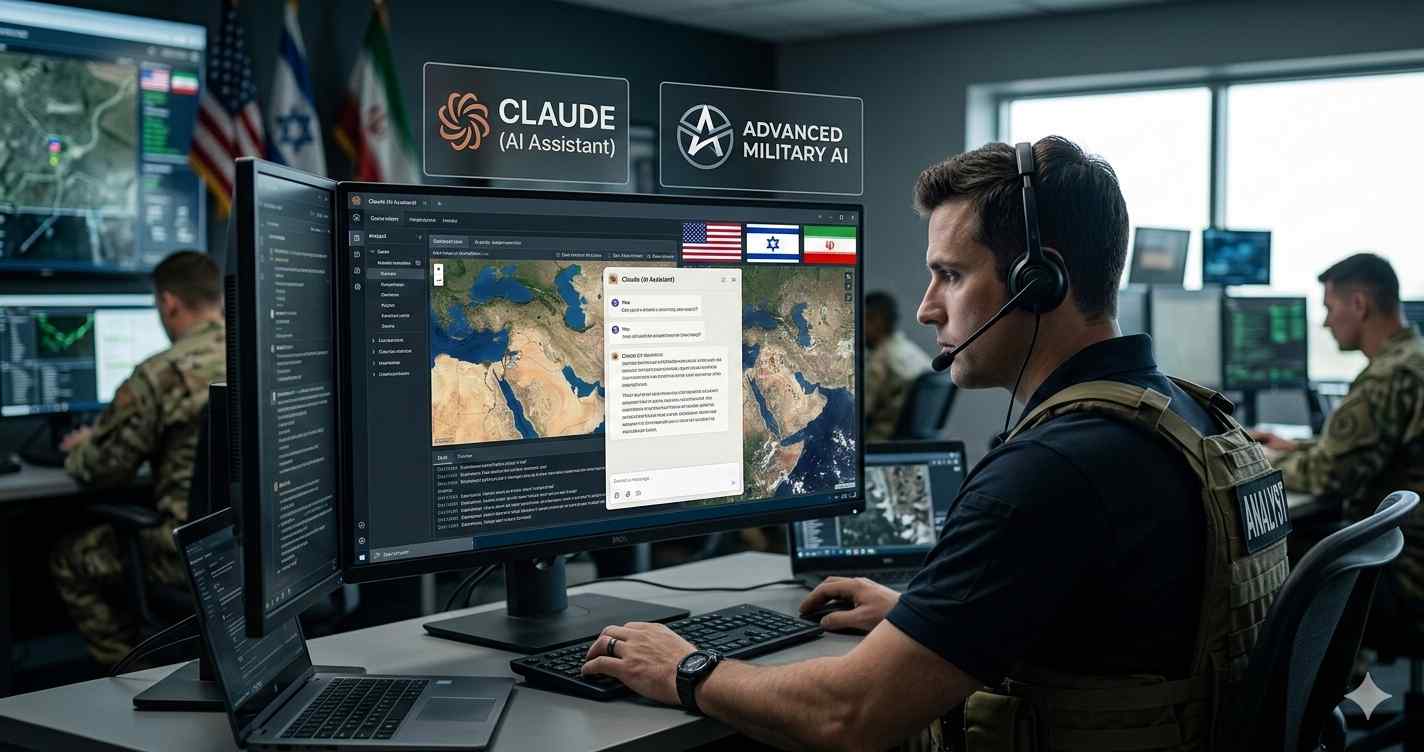
Artificial intelligence is no longer a future battlefield concept — it is actively shaping modern military operations. Advanced AI systems, including models developed by companies like Anthropic and OpenAI, are being integrated into U.S. defense infrastructure to support intelligence analysis, operational planning, logistics coordination, and real-time threat assessment.
In 2026, AI deployment inside the U.S. Department of Defense became a national policy flashpoint after reports revealed that commercial large language models had been cleared for use on classified military networks. What began as experimental AI adoption has evolved into a strategic transformation — raising urgent questions about oversight, national security, algorithmic accountability, and the future of AI-assisted warfare.
At the center of the debate is Claude, Anthropic’s advanced language model, which transitioned from enterprise chatbot to defense-grade analytical system in less than two years. The controversy surrounding its military use highlights a growing tension between Silicon Valley AI developers and Pentagon leadership over who controls operational guardrails in high-stakes environments.
As the U.S. accelerates its adoption of generative AI for defense modernization, the real conflict may not be on distant battlefields — but in Washington boardrooms and federal policy circles where decisions about AI governance, military ethics, and strategic autonomy are being made.
AI in the U.S.–Israel–Iran Conflict
The real-world context for this debate is the ongoing military confrontation between the United States, Israel, and the Islamic Republic of Iran, part of a conflict often referred to in the media as Operation Lion’s Roar or Epic Fury. A coordinated campaign of air and missile strikes by U.S. and Israeli forces targeted Iranian military infrastructure and leadership positions, drastically escalating regional tensions.
According to multiple reports from outlets including The Guardian and The Washington Post, the U.S. military used Anthropic’s Claude AI model in support of its strikes on Iran — even during a period when the administration had announced a ban on federal agencies using that technology.
Claude has been embedded into the Pentagon’s Maven Smart System, a classified platform that ingests massive amounts of satellite, signals, and battlefield intelligence. In the Iran campaign, it reportedly helped with:
- Intelligence assessments by rapidly analyzing multiple data streams
- Target identification by suggesting high-value targets
- Battle scenario simulations to model likely outcomes and prioritize actions
Even though a White House directive ordered civilian agencies to stop using Anthropic’s tools, the Department of Defense was given a phased timeline to transition away from Claude because of how deeply the system had been integrated into operational networks.
This juxtaposition — between public bans and ongoing deployment — has made the AI’s role in the Iran conflict a focal point of national debate. Critics warn that AI-enabled decision tools may accelerate the “kill chain” — the process from target identification to execution — faster than human oversight can keep up, raising questions about accountability and ethical use.
Claude’s Rise Inside the Pentagon
In recent years, Anthropic’s Claude became one of the first advanced AI models cleared for use on U.S. Defense Department classified networks. Integrated through partnerships with defense tech firms like Palantir, Claude helped analysts synthesize complex datasets, prioritize intelligence, and support planning across multiple theaters.
By early 2026, Claude’s presence was widespread within Pentagon systems and was reportedly used to support real operations, including intelligence tasks and battlefield simulations. Its deployment illustrates how commercial AI has moved from consumer assistant tools to defense-grade analytical engines.
A Public Clash Between Anthropic and the Pentagon
In late February 2026, a highly public dispute erupted between the U.S. Department of Defense and Anthropic. The core disagreement was not about whether AI belonged in defense — but under what conditions it should be used:
- The Pentagon requested AI tools be usable for all lawful purposes without restrictive guardrails, arguing this flexibility was necessary for military effectiveness.
- Anthropic’s leadership insisted on safety measures, refusing to strip out safeguards that limit fully autonomous weapons and mass surveillance capabilities.
As negotiations faltered, the administration directed federal agencies to cease using Anthropic technology, labeling the company a supply-chain risk. However, because Claude was deeply embedded in defense systems, the military continued using it under existing contracts while transitioning to alternative providers like OpenAI.
OpenAI Steps In
Following the dispute, rival AI developer OpenAI quickly agreed to provide its tools for classified military use, illustrating the strategic importance of commercial AI in defense. This move ensures continuity of AI support even as Anthropic’s role is phased out.
Why This Matters
For most people, the idea that “chatbots” are helping inform military action was once surprising. But the use of models like Claude in the U.S.–Israel–Iran conflict reveals fundamental shifts in how wars are fought:
- Government reliance on commercial AI for life-or-death decisions
- Tension over control and oversight of AI in warfare and national security
- Ethics and safety in the use of advanced models beyond research labs
- The role of technology companies in shaping the rules of engagement
The controversy surrounding Claude highlights that the biggest current struggle over AI may not be on traditional battlefields, but in boardrooms, courts, and government offices — where the future of AI governance is being contested.
