
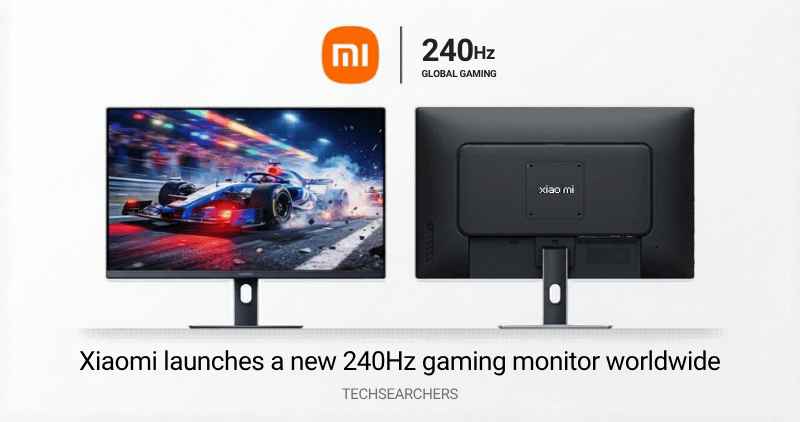
Xiaomi’s latest 240Hz gaming monitor is another signal that high-refresh displays are no longer reserved for elite esports setups. As competitive gaming keeps growing and midrange PCs become more capable, the market for fast refresh rate monitors has expanded well beyond hardcore tournament players. Xiaomi is aiming squarely at that sweet spot with a gaming display that focuses on speed, value, and practical performance.
Xiaomi’s hardware strategy
This launch fits Xiaomi’s wider hardware playbook: offer strong specs at aggressive pricing, then use scale to challenge more established display brands. The company has been steadily widening its ecosystem beyond phones and tablets, and gaming monitors are now part of that broader push. That matters because the monitor category is becoming more competitive, with buyers now expecting better motion handling, adaptive sync support, and more polished gaming-focused tuning.
The new 240Hz model is positioned as an esports-first display rather than a premium all-rounder. That gives it a clear identity in a crowded market. Instead of chasing luxury features, Xiaomi is leaning on fast refresh, low response time, and a price point designed to attract performance-conscious buyers.
Specs that matter
A 240Hz refresh rate is the headline feature, but it is only part of the story. The monitor is built around a Fast IPS panel with a 1ms gray-to-gray response time, which is important for reducing visible blur in fast-moving games. HDR support is also included, though this is more of a useful bonus than a flagship-level feature.
The real appeal is in how those specs work together. A high refresh rate improves motion smoothness, while a fast response time helps keep edges and movement looking cleaner during rapid camera shifts. For players of shooters and other reaction-heavy games, that combination can make the experience feel noticeably more responsive.
Why 240Hz matters
The case for 240Hz is strongest in esports. Games like Counter-Strike 2, Valorant, Overwatch 2, and Apex Legends benefit from faster display updates because they help reduce motion smear and improve visual tracking. If your system can push high frame rates, a 240Hz panel lets more of that performance actually reach your eyes.
That said, the difference is not equally important for everyone. Casual players may not feel a massive jump from 144Hz to 240Hz, but competitive users usually value the extra clarity and immediacy. That is why 240Hz has become a meaningful target in the gaming monitor market rather than a niche luxury spec.
Pricing and market position
Xiaomi’s biggest advantage is price. The monitor is clearly aimed at buyers who want esports-grade specs without paying OLED-level money. That puts it in direct competition with value-focused models from ASUS, MSI, and Gigabyte, while also forcing buyers to think harder about whether premium options from LG and Samsung are worth the extra cost.
The compromise is equally clear. Xiaomi is not trying to win the image-quality battle against OLED or high-end mini-LED displays. Its strengths are refresh rate, response time, and affordability. That makes it a smart option for players who care more about performance per dollar than deep blacks, top-tier contrast, or creator-grade color prestige.
How it compares
| Brand | Refresh rate | Panel type | Response time | HDR support | Best use case |
|---|---|---|---|---|---|
| Xiaomi | 240Hz | Fast IPS | 1ms GTG | Yes | Esports and budget gaming |
| ASUS | 240Hz | Gaming LCD / IPS | Around 1ms | Varies by model | Competitive gaming |
| LG | 240Hz | OLED | 0.03ms GTG | Strong HDR support | High-end gaming and mixed use |
| MSI | 240Hz | Rapid IPS | Around 0.5ms | Varies by model | Fast gaming and general use |
| Samsung | 240Hz | OLED / QD-OLED | 0.03ms GTG | Strong HDR support | Premium immersive gaming |
Competition and broader trends
Xiaomi is entering a category where brand trust matters, but so does price. ASUS has long been a familiar choice for esports-focused players, while MSI continues to push strong value in the high-refresh segment. LG and Samsung sit above that tier with OLED models that offer stronger contrast and better overall image quality, but also much higher prices.
That creates a useful opening for Xiaomi. Many buyers want a monitor that feels fast, looks modern, and does not blow up the budget. As PC gaming continues to split into premium OLED and affordable high-refresh LCD tiers, Xiaomi is positioning itself on the side of practical performance.
Conclusion
Xiaomi’s growing aggression in gaming hardware makes sense. The company understands that value still wins a huge part of the market, especially when the product delivers the right mix of speed and affordability. This 240Hz monitor may not be the most premium option on the shelf, but it strengthens Xiaomi’s case as a serious challenger in global gaming displays, and it raises the pressure on every brand competing in the value-performance segment.
Frequently Asked Questions
What is the Xiaomi 240Hz gaming monitor best for?
It is best for esports gaming, fast FPS titles, and buyers who want high refresh performance at a lower price.
Is 240Hz better than 144Hz for gaming?
Yes, 240Hz gives smoother motion and lower perceived blur, especially in competitive games with high frame rates.
Does Xiaomi’s 240Hz monitor compete with OLED models?
Not directly. It competes on price and speed, while OLED monitors from LG and Samsung focus on better image quality.
