
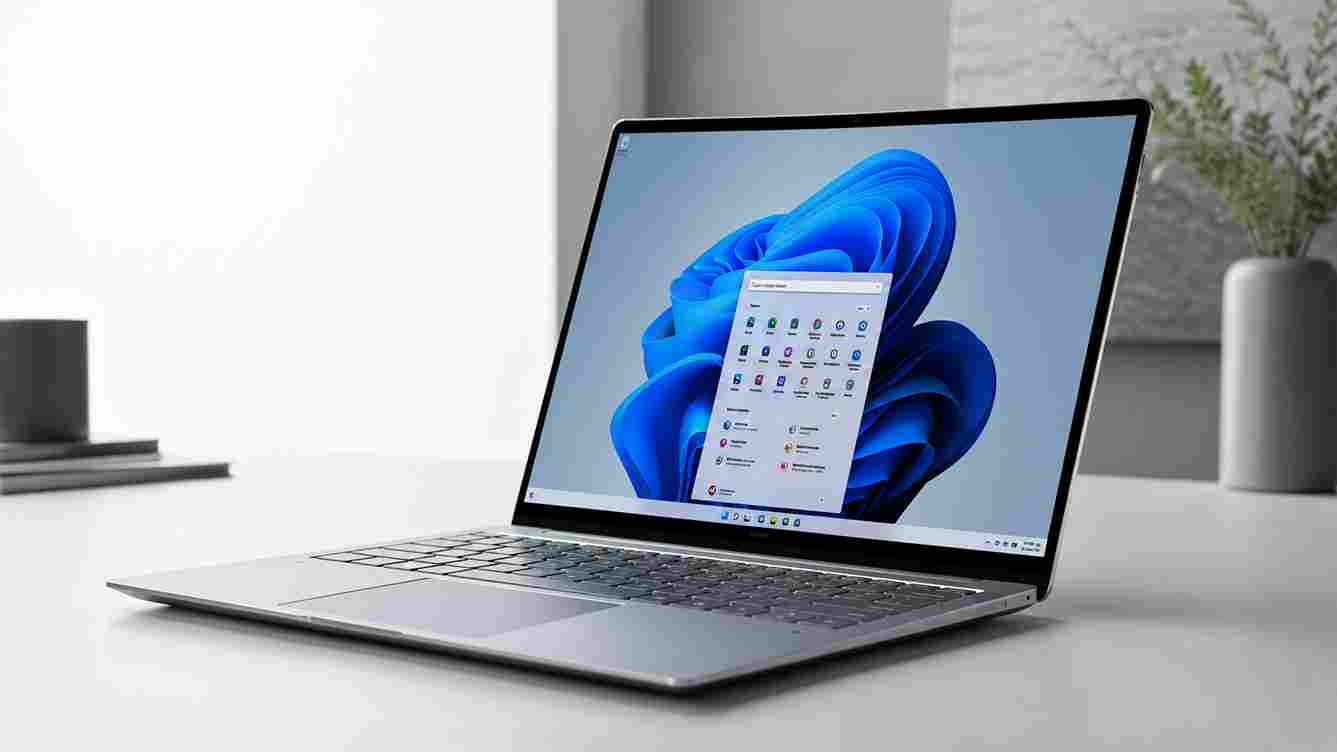
Microsoft officially announced the Surface Laptop Ultra at Computex 2026 on June 1, 2026. Built in partnership with NVIDIA around the new RTX Spark chip, based on Blackwell GPU architecture — this is the most powerful Surface device ever made. It features a 15-inch mini-LED PixelSense Ultra display, up to 128GB of unified memory, and 1 petaflop of on-device AI compute. Pricing has not yet been announced. Availability is confirmed for fall 2026.
For years, Windows laptop makers have competed fiercely on price, design, and incremental performance gains. The MacBook Pro sat largely unchallenged at the top of the premium creator laptop segment, offering a level of integration between silicon, software, and hardware that Windows rivals simply could not match.
That era may now be over.
At Computex 2026 in Taipei on June 1, Microsoft unveiled the Surface Laptop Ultra, its most powerful laptop to date and one of the world’s first notebooks to run on NVIDIA’s brand-new RTX Spark chip. This is not a spec refresh. It is a platform shift — one that ends Intel and AMD’s decades-long hold on premium Surface hardware and brings Blackwell-generation GPU performance, a studio-grade mini-LED display, and 1 petaflop of local AI compute into a laptop that weighs under 4.5 pounds.
The Surface Laptop Ultra is Microsoft’s clearest statement yet about what a next-generation Windows AI PC should look like.
What Is the Surface Laptop Ultra?
The Surface Laptop Ultra is a new flagship tier in Microsoft’s Surface lineup, sitting above both the standard Surface Laptop and the now-discontinued Surface Laptop Studio. It is the first Surface device designed from the silicon up in direct partnership with NVIDIA, and it is one of the launch partners for NVIDIA’s RTX Spark platform — a new chip category that combines a Blackwell GPU with NVIDIA’s Grace CPU architecture.
According to Microsoft’s Corporate Vice President Brett Ostrum, writing on the Microsoft Devices Blog, the device was built for what the company calls “world makers” — creators, developers, AI builders, and professionals who run workloads that standard ultrabooks simply cannot handle.
Microsoft is targeting three specific professional audiences:
- Creators — filmmakers, photographers, and 3D artists working with large asset files and real-time rendering pipelines
- Developers — software engineers running extended compile cycles or building AI-powered applications locally
- AI builders — researchers and agent developers who need to run frontier-scale language models on a portable device
Computex 2026 Announcement Highlights
The announcement came just hours after NVIDIA CEO Jensen Huang unveiled the RTX Spark platform during his own Computex 2026 keynote, setting up a coordinated double launch that sent a clear message: Microsoft and NVIDIA are building the future of Windows computing together.
Key announcement highlights confirmed at Computex 2026:
- First Surface laptop to use NVIDIA silicon as its primary processor
- Blackwell RTX GPU with full CUDA support — a first for any Windows laptop running Arm architecture
- Up to 1 petaflop of on-device AI compute
- 15-inch mini-LED PixelSense Ultra display at 2,000 nits peak HDR brightness
- Up to 128GB of unified LPDDR5X memory dynamically shared between CPU and GPU
- 2.5x the thermal headroom of the Surface Laptop 7 15-inch
- Thermal management handled by a dual-fan active cooling system
- Fall 2026 global availability; pricing not yet announced
Windows Central’s hands-on preview at Computex described the device as “chunky and hefty, but in a good way — just like the 16-inch MacBook Pro,” and noted the build quality feels exceptional for a pre-production unit.
Mini-LED Display: Features and Benefits
The display on the Surface Laptop Ultra is the most significant screen Microsoft has ever shipped on a Surface device, and arguably one of the best panels currently available in any laptop.
Specifications
- Panel type: Mini-LED PixelSense Ultra touchscreen
- Screen size: 15 inches
- Resolution: 2,880 × 1,920 pixels
- Pixel density: 262 PPI
- Aspect ratio: 3:2
- Peak HDR brightness: Up to 2,000 nits
- Color accuracy: High-precision, confirmed for creative professional use
Why Mini-LED Matters Here
Mini-LED backlighting uses thousands of individually controllable LED zones rather than a single backlight panel. The result is dramatically better local dimming, which enables near-OLED levels of contrast in dark scenes while sustaining the full brightness needed for HDR workflows in daylight environments.
For the core audiences Microsoft is targeting — video editors color-grading HDR footage, photographers editing RAW files, and 3D artists previewing lit renders — a 2,000-nit display with accurate color reproduction is not a luxury. It is a workflow requirement.
The 3:2 aspect ratio also provides more vertical screen space than the 16:9 or 16:10 panels common in competing laptops, which is meaningfully more comfortable for long coding or document editing sessions.
RTX Graphics Performance Explained
The RTX Spark Platform
The NVIDIA RTX Spark chip at the heart of the Surface Laptop Ultra is built on Blackwell GPU architecture and paired with NVIDIA’s Grace CPU — a 20-core Arm-based processor — connected via NVIDIA’s NVLink chip-to-chip interface. This tight integration allows the CPU and GPU to share a unified memory pool without the bottleneck of traditional discrete GPU memory.
Performance Positioning
Microsoft has confirmed the following GPU specifications:
- GPU: NVIDIA Blackwell RTX (full CUDA support)
- CUDA cores: Up to 6,144
- GPU performance tier: Roughly equivalent to an NVIDIA RTX 5070 at up to 80W power draw
- CPU: 20-core NVIDIA Grace (Arm architecture)
- Unified memory: Up to 128GB LPDDR5X, dynamically allocated between CPU and GPU
The 6,144-CUDA-core Blackwell GPU at 80W is a meaningful constraint compared to a full desktop RTX 5070, but it is still a significant step above any integrated graphics solution and ahead of most discrete GPUs previously available in thin-and-light laptops. The unified memory architecture is particularly important: where traditional GPU designs hit hard memory limits when a 16GB or 24GB discrete VRAM pool fills up, the Surface Laptop Ultra can draw from the full 128GB pool.
Gaming Performance
While Microsoft has positioned this device primarily for professional and creative workloads rather than gaming, the Blackwell GPU’s CUDA core count and the NVIDIA Game Ready driver support confirmed through CUDA compatibility means the Surface Laptop Ultra is capable of handling modern titles at its native 2,880 × 1,920 resolution. Full independent gaming benchmarks will not be available until devices ship in fall 2026.
AI and Productivity Enhancements
1 Petaflop of Local AI Compute
The headline AI specification is 1 petaflop of on-device AI compute — enough, according to Microsoft, to run language models with up to 120 billion parameters entirely locally, without a cloud connection.
To put that number in perspective: most current Copilot+ PCs deliver between 40 and 50 TOPS from their NPUs. The Surface Laptop Ultra’s RTX Spark platform operates at an entirely different order of magnitude, enabling it to run the kinds of large multimodal models that typically require a server GPU or cloud API.
Windows AI Agents and Containment
Microsoft used the Surface Laptop Ultra launch to introduce new Windows security primitives specifically designed for the coming era of local AI agents. These agents — AI assistants capable of executing tasks such as debugging code, managing file workflows, or automating system operations — are sandboxed within a new containment framework that restricts their access to only the data the user explicitly permits.
This architecture provides on-device governance that cloud-based AI tools cannot offer, addressing a concern that has long made enterprise IT departments hesitant about deploying AI agents at scale.
Software Ecosystem
Microsoft confirmed that NVIDIA’s OpenShell is coming to Windows on this platform, expanding the available AI application layer. The device supports full CUDA, meaning the existing library of CUDA-accelerated professional applications — including those from Adobe, DaVinci Resolve, and Autodesk — runs natively.
Design, Build Quality, and Portability
The Surface Laptop Ultra adopts a straightforward clamshell form factor, deliberately avoiding the more experimental designs of the Surface Book and Surface Laptop Studio. There is no detachable screen, no adjustable hinge mechanism — just a clean, premium laptop with a focus on performance rather than flexibility.
Key Design Details
- Form factor: Traditional clamshell
- Weight: Under 4.5 pounds (under 2kg)
- Cooling: Dual-fan active thermal system; 2.5x thermal headroom vs. Surface Laptop 7 15
- Color options: Platinum and Nightfall
- Touchpad: Largest haptic touchpad ever included on a Surface
- Ports: HDMI, USB-C, USB-A, SD card reader, 3.5mm headphone jack
The port selection is a significant practical decision. In a market where several competitors ship thin laptops with only USB-C ports, Microsoft has included every connection a working creative professional needs, eliminating the need for a hub or dongle in a studio or on-set environment.
Early hands-on impressions from Computex describe the chassis as noticeably thicker and heavier than the Surface Laptop 7 — a necessary trade-off for the dual-fan cooling required to sustain the RTX Spark chip at its 80W turbo power draw — but solid and premium in feel.
Battery Life and Efficiency
Microsoft has not released specific battery life figures for the Surface Laptop Ultra ahead of its fall 2026 launch. Given the 80W turbo power draw of the RTX Spark chip under full load, battery life during sustained GPU-heavy workloads will be considerably shorter than in an ultrabook.
It is reasonable to expect the device to perform well in lighter tasks — document editing, communication, web browsing — given the Grace CPU’s Arm efficiency heritage, while accepting that 3D rendering or large model inference will significantly reduce runtime.
Independent battery life testing will be required to make definitive comparisons, and those results will not be available until consumer units ship.
Comparison With Previous Surface Models
| Specification | Surface Laptop 7 (15-inch) | Surface Laptop Ultra |
|---|---|---|
| CPU | Intel Core Ultra 7 268V | NVIDIA Grace 20-core (Arm) |
| GPU | Intel Arc Integrated | NVIDIA Blackwell RTX (6,144 CUDA) |
| Max RAM | 64GB LPDDR5X | 128GB LPDDR5X unified |
| Display | 15-inch IPS PixelSense, 600 nits | 15-inch mini-LED, 2,000 nits |
| Resolution | 2,496 × 1,664 | 2,880 × 1,920 |
| AI Compute | ~40 NPU TOPS | 1 petaflop |
| Thermal System | Single fan | Dual fan (2.5x headroom) |
| Max Local AI Model Size | Small / mid-size models | Up to 120B parameter models |
| Ports | USB-C, USB-A, Surface Connect | HDMI, USB-C, USB-A, SD, 3.5mm jack |
| Starting Price | From $1,699 | Not yet announced |
| Availability | Available now | Fall 2026 |
Competition: How It Stacks Up
Competitive Comparison Table
| Device | GPU | Max RAM | Display | Starting Price |
|---|---|---|---|---|
| Microsoft Surface Laptop Ultra | NVIDIA Blackwell RTX (6,144 CUDA) | 128GB | 15-inch mini-LED, 2,000 nits | Not announced |
| Apple MacBook Pro M5 Max (16″) | Apple M5 Max GPU (40-core) | 128GB | 16-inch Liquid Retina XDR | From $3,599 |
| ASUS ProArt Studiobook (RTX Spark) | NVIDIA Blackwell RTX | Up to 128GB | OLED / mini-LED options | TBA, Fall 2026 |
| Dell XPS 16 (2025) | NVIDIA RTX 4070 discrete | 64GB | 16-inch OLED, 400 nits | From $2,499 |
| Lenovo Yoga Pro 9i (2025) | NVIDIA RTX 4070 discrete | 64GB | 16-inch mini-LED | From $2,299 |
Important note on the competition table: ASUS, Dell, HP, Lenovo, and MSI have all been confirmed as RTX Spark launch partners, but specifications and pricing for their specific 2026 devices have not yet been fully disclosed. The Dell XPS and Lenovo Yoga figures reflect the most recent available shipping configurations and are included for general market context only.
Against the MacBook Pro M5 Max
Apple’s MacBook Pro M5 Max remains the benchmark for premium creator laptops. The Surface Laptop Ultra matches it on maximum memory capacity at 128GB and exceeds it on raw AI compute throughput, while the MacBook Pro retains advantages in software optimization, battery life, and a more mature Arm application ecosystem. Independent benchmark comparisons will be critical when both devices are available for testing.
Expected Pricing and Availability
Microsoft has confirmed that the Surface Laptop Ultra will be available globally in fall 2026, with October or November being the most widely cited launch window based on Microsoft’s historical Surface release schedule. Specific retail dates and pricing have not been announced.
Microsoft has not disclosed any pricing. Industry analysts and technology media have estimated the entry configuration will likely start between $2,500 and $3,000, with the fully configured 128GB model expected to push significantly higher. These are estimates only and should not be treated as confirmed figures.
The device will be available from Microsoft directly and through authorized retail partners. Other RTX Spark laptops from Dell, HP, ASUS, Lenovo, and MSI are expected to launch in the same fall 2026 window.
Industry Analysis: Why This Launch Matters for the Premium Laptop Market
The Surface Laptop Ultra is significant for several reasons that extend well beyond its own specifications.
It resets expectations for Windows AI performance. Up to this point, the Windows AI PC conversation has centered on 40–50 TOPS NPUs and small on-device models. Running 120-billion-parameter models locally on a laptop changes the reference point entirely and forces every other premium Windows laptop maker to respond.
It marks a genuine third option in laptop silicon. The laptop CPU market has been a two-horse race between Intel and AMD for decades, with Qualcomm’s Snapdragon X series representing the first serious challenge. NVIDIA’s RTX Spark — and Microsoft’s bet on it as the basis for its most premium product — signals that Arm-based GPU-first laptop computing is not a niche but a new mainstream direction for high-performance Windows devices.
It raises the MacBook Pro comparison to a fair fight for the first time. Previous Surface devices were competitive in many areas but never matched Apple’s silicon integration. A device engineered from the silicon up with a single chip partner, running a unified memory architecture with full software optimization for its hardware, is structurally more similar to how Apple builds its products than any Windows laptop has been before.
The key unknowns remain. Real-world performance under sustained workloads, battery life outside of light tasks, x86 application compatibility on Arm, thermal throttling behavior, and final pricing will all determine whether this is a landmark product or an impressive announcement that underdelivers at retail. Fall 2026 and independent reviewer testing will provide those answers.
Key Takeaways
- The Microsoft Surface Laptop Ultra was announced at Computex 2026 on June 1, 2026, in partnership with NVIDIA.
- It is powered by the NVIDIA RTX Spark chip, combining a 20-core Grace CPU with a Blackwell GPU featuring up to 6,144 CUDA cores — the first time NVIDIA silicon has ever served as the primary processor in a Windows laptop.
- GPU performance is equivalent to roughly an RTX 5070 at up to 80W TDP.
- The device delivers up to 1 petaflop of on-device AI compute and can run language models with up to 120 billion parameters locally.
- Memory tops out at 128GB of LPDDR5X unified RAM dynamically shared between CPU and GPU.
- The 15-inch mini-LED PixelSense Ultra display reaches 2,000 nits peak HDR brightness — the brightest display ever shipped on a Surface.
- The device weighs under 4.5 pounds and uses a dual-fan cooling system with 2.5x the thermal headroom of the Surface Laptop 7 15-inch.
- Ports include HDMI, USB-C, USB-A, SD card reader, and a 3.5mm jack — a deliberately practical choice against dongle-dependent designs.
- Two color options: Platinum and Nightfall.
- Global availability is confirmed for fall 2026. Pricing has not been announced. Industry estimates range from $2,500 to well above $3,500 depending on configuration.
- Other RTX Spark launch partners include ASUS, Dell, HP, Lenovo, and MSI.
Conclusion
The Microsoft Surface Laptop Ultra is not just a new laptop. It is an argument — a carefully constructed case that Windows can compete at the very top of the premium creator market on performance, display quality, and AI capability in the same way Apple has for years.
The NVIDIA RTX Spark chip, the 2,000-nit mini-LED display, and a memory architecture capable of running models that previously required a server rack are not incremental improvements. They are a category jump.
Whether the Surface Laptop Ultra fulfills its promise in daily professional use depends on factors that only shipping hardware and independent testing can answer: battery life under sustained load, x86 app compatibility on Arm, thermal behavior during long render jobs, and crucially, a final price that the professionals it targets are willing to pay.
What is certain today is that Microsoft has raised the stakes for every premium Windows laptop maker heading into the second half of 2026 — and for the first time in a long time, the MacBook Pro has a credible Windows rival worth watching closely.
Frequently Asked Questions
When does the Microsoft Surface Laptop Ultra go on sale?
Microsoft has confirmed availability in fall 2026. A specific retail date has not been announced. Based on Microsoft’s historical Surface release schedule, October or November 2026 are the most commonly cited windows in industry reporting.
What is the price of the Surface Laptop Ultra?
Microsoft has not announced official pricing. Industry analysts and technology publications have estimated the entry configuration will start between $2,500 and $3,000, with the maxed-out 128GB model likely priced significantly higher. These are estimates only.
What is the NVIDIA RTX Spark chip?
The RTX Spark is a new system-on-chip from NVIDIA announced at Computex 2026. It combines a 20-core Grace CPU (Arm architecture) with a Blackwell GPU featuring up to 6,144 CUDA cores, connected through NVIDIA’s NVLink interface. The CPU and GPU share a unified LPDDR5X memory pool, and the platform delivers up to 1 petaflop of AI compute. It is the first NVIDIA chip to serve as the primary processor in a Windows laptop.
How does the Surface Laptop Ultra compare to the MacBook Pro M5 Max?
Both devices support up to 128GB of unified memory. The Surface Laptop Ultra claims higher raw AI compute throughput at 1 petaflop versus Apple’s M5 Max architecture. The MacBook Pro has advantages in software optimization maturity, battery life, and the breadth of its native Arm application library. A fair head-to-head comparison will require independent testing once both devices are commercially available.
Is the Surface Laptop Ultra good for gaming?
Microsoft has positioned the device for professional creative and AI workflows rather than gaming. That said, the NVIDIA Blackwell GPU with 6,144 CUDA cores and full CUDA support is technically capable of handling modern titles, particularly with NVIDIA’s upscaling technology. Comprehensive gaming benchmark data will not be available until reviewer units ship in fall 2026.
