
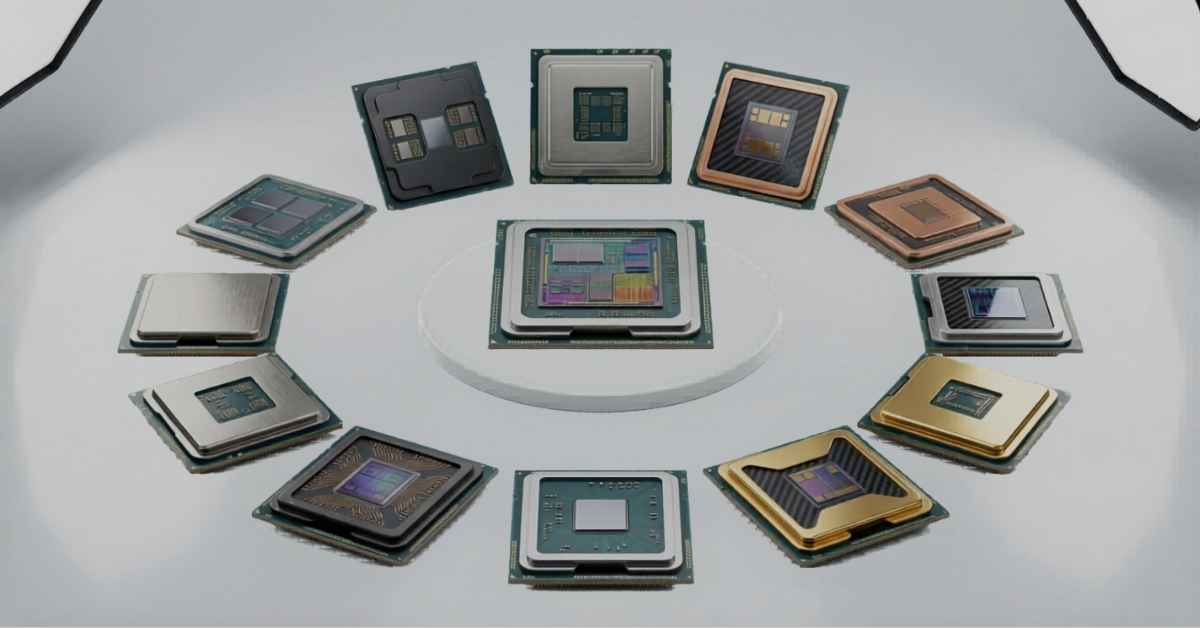
Picking the wrong CPU in 2026 means wasted money, bottlenecked performance, and a platform you can’t upgrade. AMD and Intel both launched genuinely strong chips this year, but they solve different problems for different users.
This guide cuts through the noise. Every CPU covered here was confirmed to be released in 2026, with specs pulled directly from official product pages and verified by independent reviews. No leaked chips. No speculation. No filler.
Whether you’re building a competitive gaming rig, a video editing workstation, or a compact AI inference machine, the right CPU exists in this lineup. The challenge is knowing which one matches your actual workload, not just the one with the biggest number on the box.
By the end of this guide, you’ll know exactly which chip to buy, why it outperforms its competitors, and what it will cost you, including the platform around it..
Full Comparison Table
| CPU | Released | Key Specs | Price / Buy |
|---|---|---|---|
| AMD Ryzen 7 9850X3D | Jan 29, 2026 | 8C/16T, 96MB 3D Cache, 120W | Amazon |
| Intel Core Ultra 5 250K Plus | Mar 26, 2026 | 18C, 30MB Cache, 125W | Amazon |
| Intel Core Ultra 7 270K Plus | Mar 26, 2026 | 24C, 36MB Cache, 125–250W | Amazon |
| Intel Core Ultra 5 250KF Plus | Mar 26, 2026 | 18C, 30MB Cache, 125W | Amazon |
| AMD Ryzen 9 9950X3D2 | Apr 22, 2026 | 16C/32T, 192MB Cache, 200W | Amazon |
| Intel Core Ultra X9 388H | Jan 2026 | 16C, 24MB Cache, 28–55W | Amazon |
| Intel Core Ultra 9 386H | Jan 2026 | 16C, 24MB Cache, 28–55W | Amazon |
| AMD Ryzen AI Max+ 392 | Q1 2026 | 12C/24T, 64MB Cache, 45–120W | Amazon |
| AMD Ryzen AI Max+ 388 | Q1 2026 | 8C/16T, 64MB Cache, 45–120W | Amazon |
| Intel Xeon 658X | Mar 2026 | 48C/96T, ~144MB Cache, ~300W | Amazon |
| Intel Xeon 698X | Mar 2026 | 86C/172T, 336MB Cache, 350W | Amazon |
Desktop Gaming CPUs
1. AMD Ryzen 7 9850X3D
The Ryzen 7 9850X3D is AMD’s fastest single gaming CPU released in 2026. It is a refined version of the Ryzen 7 9800X3D with one meaningful change: the maximum boost clock rises from 5.2 GHz to 5.6 GHz — a 400 MHz improvement. Every other spec is identical. AMD positions it as the world’s fastest gaming processor at launch, and independent reviews from HotHardware, PC Guide, and GamingOnLinux confirm this.
AMD’s own benchmark data, tested against 35 games at 1080p high settings with an RTX 5090, shows the 9850X3D averaging 27% faster frame rates than the Intel Core Ultra 9 285K. Compared to the 9800X3D, the improvement is around 5–7% depending on the title.
One practical advantage: AMD tested 30+ games and found the FPS difference between DDR5-4800 and DDR5-6000 RAM is under 1%. The large 96 MB 3D V-Cache reduces how often the chip needs to access main memory, meaning you do not need expensive high-speed RAM to unlock its full performance.
Specifications
The Ryzen 7 9850X3D is AMD’s top gaming CPU in 2026. It keeps the same core design as the previous model but boosts clock speed to 5.6 GHz. With massive 3D V-Cache, it delivers extremely high FPS without needing expensive RAM, making it ideal for pure gaming builds.
Key Points
- 8 cores / 16 threads (Zen 5)
- 5.6 GHz boost (400 MHz higher vs 9800X3D)
- 96 MB 3D V-Cache (huge gaming advantage)
- DDR5 not critical for performance
- AM5 platform longevity (future upgrades)
- 120W power = easy cooling
Pros and Cons
| Pros | Cons |
|---|---|
| Fastest gaming CPU (2026 launch) | Only 5–7% gain vs 9800X3D |
| Massive 3D V-Cache boosts FPS | Weak for heavy productivity |
| No need for expensive RAM | $499 is expensive |
| AM5 upgrade support | Minor generational upgrade |
| Easy to cool (120W) | Not for multi-core workloads |
Best Use Case: Pure gaming builds where maximizing frame rates at 1080p and 1440p is the priority. Ideal for competitive gaming on high-refresh monitors (144Hz–360Hz).
2. Intel Core Ultra 5 250K Plus
Intel launched three Arrow Lake Refresh CPUs on March 26, 2026. The Core Ultra 5 250K Plus is the budget standout. At $199, it replaces the Core Ultra 5 245K and adds four more efficiency cores (now 6P+12E = 18 total), expands the L3 cache from 24 MB to 30 MB, and boosts the die-to-die interconnect frequency by 900 MHz — directly improving memory latency.
Reviewed by TechSpot, HotHardware, Tom’s Hardware, The Register, and Guru3D, the 250K Plus is consistently described as the best $200 CPU in 2026. TechSpot benchmarks show it 85% faster than the Ryzen 5 9600X in Cinebench 2026 multi-core, and within 10% of the Core Ultra 7 265K (a chip that launched for over $300). In gaming, results vary by title — the 250K Plus trades blows with the Ryzen 5 9600X in some games and leads significantly in multithreaded workloads.
Intel’s Binary Optimization Tool (BOT) adds software-driven gaming gains: up to 39% in supported titles, 15% average across 38 games versus original Arrow Lake chips.
Benchmark Snapshot (vs. Ryzen 5 9600X at same price):
| Benchmark | Core Ultra 5 250K Plus | Ryzen 5 9600X | Source |
|---|---|---|---|
| Cinebench 2026 Multi-core | +85% faster | Baseline | TechSpot |
| Single-thread | +6% faster | Baseline | TechSpot |
| Battlefield 6 avg FPS | +11% | Baseline | TechSpot |
| Battlefield 6 (1% lows) | +33% better | Baseline | TechSpot |
| Rainbow Six Siege | −19% (slower) | Baseline | TechSpot |
Specifications
This is the best budget CPU of 2026. It delivers strong multi-core performance with 18 cores at just $199. While gaming is mixed, it dominates productivity tasks and offers excellent value for students, streamers, and creators.
Key Points
- 18 cores (6P + 12E)
- 5.3 GHz boost clock
- 30 MB cache
- DDR5-7200 native support
- Strong multi-core performance
- Best value CPU (~$199)
| Pros | Cons |
|---|---|
| Best price-to-performance CPU | Gaming performance inconsistent |
| Strong multi-core power | No 3D V-Cache |
| High-speed DDR5 support | Platform not future-proof |
| Great for multitasking | E-cores weaker in light tasks |
| Good for creators & students | E-cores are weaker in light tasks |
Best Use Case: Budget gaming and content creation builds. Outstanding value for streamers, students, and anyone who games and also does video editing, compiling, or office productivity work.
3. Intel Core Ultra 7 270K Plus
The Core Ultra 7 270K Plus is Intel’s flagship Arrow Lake Refresh chip. It maxes out the Arrow Lake-S silicon with the full 8P+16E (24-core) configuration — the same core count as the Core Ultra 9 285K — at $299, compared to the 285K’s $589 launch price. This is the most significant price-performance shift in Intel’s desktop lineup in years.
Reviews from Guru3D, Tom’s Hardware, HotHardware, The Register, and DropReference confirm strong gaming and dominant multithreaded performance. In Cinebench 2026 multi-core, it beats the Core i9-14900K by 10% and the Core Ultra 7 265K by 23%. In gaming, it averages only 12% behind the Ryzen 7 9800X3D, despite costing $180 less.
Three key interconnect upgrades distinguish it from the original Arrow Lake: die-to-die frequency jumps to 3 GHz (+43% vs the 285K), ring clock rises to 3.9 GHz, and IMC frequency gains 400 MHz. These directly address Arrow Lake’s original latency problems.
Benchmark Snapshot:
| Benchmark | 270K Plus | Core Ultra 7 265K | Source |
|---|---|---|---|
| Cinebench 2026 Multi | +23% | Baseline | DropReference |
| 7-Zip Compression | +18% | Baseline | DropReference |
| Geekbench 6 Single-core | 3,356 | ~3,070 | The Register |
| Geekbench 6 Multi-core | 23,372 | ~18,900 | The Register |
| Gaming vs Ryzen 7 9800X3D | −12% avg | — | Intel / Reviewers |
Specifications
The 270K Plus offers flagship-level performance at a mid-range price. With 24 cores, it delivers excellent productivity performance while still being strong in gaming, making it a balanced CPU for mixed workloads.
Key Points
- 24 cores (8P + 16E)
- 5.5 GHz boost
- 36 MB cache
- Strong multi-core performance
- Improved latency vs previous gen
- Great value at $299
| Pros | Cons |
|---|---|
| 24 cores at mid price | High power draw (250W) |
| Excellent productivity | Still behind X3D in gaming |
| Strong overall performance | Dead-end platform |
| Good for creators | Needs strong cooling |
| DDR5-7200 support | Slightly weaker single-core |
Best Use Case: Gaming combined with serious productivity — video editing, Blender, streaming, code compilation. Best overall Intel desktop CPU value in 2026.
4. Intel Core Ultra 5 250KF Plus
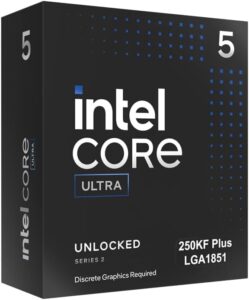
The 250KF Plus is identical to the 250K Plus in every way except one: the integrated GPU is disabled. Intel designates chips without iGPU with the “KF” suffix. CPU performance is the same; the small price discount (~$15 vs the 250K Plus) makes it the cheapest way to get onto the Arrow Lake Refresh platform. All three Arrow Lake Refresh CPUs launched together on March 26, 2026.
Specifications
The 250KF Plus is a cheaper version of the 250K Plus without integrated graphics. It offers identical CPU performance, making it ideal for users who already use a dedicated GPU.
Key Points
- Same 18-core design as 250K Plus
- No integrated graphics
- Slightly cheaper (~$185)
- Best for GPU-based builds
- Same performance as 250K
| Pros | Cons |
|---|---|
| Cheapest entry into platform | No iGPU |
| Same performance as 250K | Needs GPU to boot/display |
| Good for gaming rigs | Limited savings (~$15) |
| Strong multi-core | Same platform limitations |
| Great value option | No troubleshooting fallback |
Best Use Case: Dedicated gaming and workstation builds where a discrete GPU is always installed and integrated graphics are not needed.
Desktop Productivity & Hybrid CPUs
5. AMD Ryzen 9 9950X3D2 Dual Edition
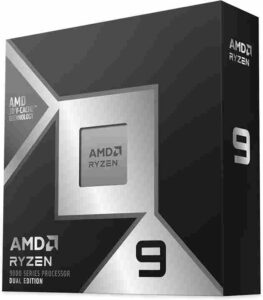
The Ryzen 9 9950X3D2 Dual Edition is the world’s first desktop CPU with 3D V-Cache stacked on both of its two chiplets (CCDs). Every previous multi-chiplet X3D design only stacked cache on one CCD. This meant threads running on the non-cached CCD had to cross the inter-chiplet bus to access L3 data, adding latency. The 9950X3D2 eliminates this “bad CCD” scheduling problem — all 16 cores have equal, local access to large cache.
AMD confirmed the $899 MSRP via VP David McAfee on X. TechPowerUp’s CPU database lists 192 MB of L3 cache (208 MB total including L2) and a 200W TDP — 30W higher than the 9950X3D. Tom’s Hardware’s review confirms the max boost is 5.6 GHz, slightly lower than the 9950X3D’s 5.7 GHz, attributing this to the thermal overhead of dual cache stacks.
AMD’s performance data (tested by BOXX Performance Labs): up to 7% better in Blender rendering, improvements in DaVinci Resolve, Unreal Engine compilation, SPEC Workstation 4.0 data science and life sciences benchmarks, and ComfyUI AI inference versus the 9950X3D.
Specification Comparison:
| 9950X3D2 | 9950X3D | 9850X3D | |
|---|---|---|---|
| Cores | 16 | 16 | 8 |
| Max Boost | 5.6 GHz | 5.7 GHz | 5.6 GHz |
| L3 Cache | 192 MB | 128 MB | 96 MB |
| V-Cache CCDs | Both (2) | One (1) | One (1) |
| TDP | 200W | 170W | 120W |
| Launch Price | $899 | $699 | $499 |
Specifications
This is a high-end hybrid CPU for both gaming and heavy workloads. Its dual 3D V-Cache design removes latency issues and improves performance in rendering, AI, and development tasks, but at a very high cost.
Key Points
- 16 cores / 32 threads
- Dual 3D V-Cache (192 MB L3)
- 5.6 GHz boost
- Best for creators + gaming
- Requires strong cooling (360mm AIO)
- Premium price ($899)
| Pros | Cons |
|---|---|
| Massive 208 MB total cache | Very expensive |
| Best hybrid performance | Needs heavy cooling |
| No CCD latency issues | Small gain vs 9950X3D |
| Strong for AI & rendering | Not best pure gaming value |
| AM5 compatible | Niche audience |
Best Use Case: Content creators and developers who also game heavily. Targets Blender/V-Ray rendering, Unreal Engine compilation, DaVinci Resolve, and AI inference workloads combined with serious gaming. Not recommended if gaming is your primary use case.
Laptop CPUs
Important: These are mobile SoC designs soldered to laptop motherboards. They cannot be purchased individually for DIY desktop builds. Purchase through OEM laptop or mini-PC systems only.
6. Intel Core Ultra X9 388H (Panther Lake)
Panther Lake launched at CES 2026 as Intel’s Core Ultra Series 3. The flagship Core Ultra X9 388H is the first consumer CPU built on Intel’s in-house 18A process node — Intel’s return to cutting-edge in-house fabrication after years of relying on TSMC for client chips. Intel designates the “Core Ultra X” sub-brand for the high-performance 388H and 368H variants equipped with the larger 12-core Arc B390 GPU tile.
Specifications
Launched in January 2026 (CES 2026), this is Intel’s first 18A-based consumer CPU. It delivers massive gains in CPU, GPU, and AI performance, making it one of the most powerful laptop chips without needing a dedicated GPU.
Key Points
- Release: January 2026 (CES)
- 16 cores (4P + 8E + 4 LP-E)
- ~5.1 GHz boost
- Arc B390 iGPU (12 Xe3 cores)
- Up to 180 AI TOPS
- LPDDR5X / DDR5 support
- OEM laptops only
| Pros | Cons |
|---|---|
| First 18A consumer CPU | Not available standalone |
| 50%+ faster vs Lunar Lake | Expensive laptops |
| Strong iGPU (beats Radeon 890M) | Thunderbolt 4 only |
| High AI performance (180 TOPS) | Early platform maturity |
| Great for thin laptops | OEM dependent |
Best Use Case: High-performance thin laptops for software developers, creative professionals, and power users who want strong CPU and GPU performance in a portable form factor without a dedicated graphics card.
7. Intel Core Ultra 9 386H (Panther Lake)
The Core Ultra 9 386H shares the same Panther Lake silicon as the 388H but ships with the smaller 4-Xe3-core iGPU tile. This chip targets laptops paired with a discrete GPU (such as NVIDIA RTX 5000-series), where the integrated graphics serve only as a display output rather than a primary renderer. The full CPU cores and 18A efficiency remain identical to the 388H.
Specifications and Value (Explanation)
Released in January 2026 (CES 2026), the 386H shares the same CPU performance as the 388H but uses a smaller iGPU. It is designed for laptops with dedicated GPUs, focusing on efficiency and balanced performance.
Key Points
- Release: January 2026 (CES)
- 16 cores (same as 388H)
- Intel 18A process
- Smaller iGPU (4 Xe3 cores)
- Same CPU performance as 388H
- OEM-only availability
| Pros | Cons |
|---|---|
| Same CPU power as 388H | Weak integrated graphics |
| Better efficiency | Needs discrete GPU |
| Ideal for gaming laptops | No retail availability |
| Lower power usage | Limited standalone use |
| Wide OEM support | GPU-dependent performance |
Best Use Case: Professional and gaming laptops paired with an NVIDIA or AMD discrete GPU for video editing, 3D work, coding, and gaming.
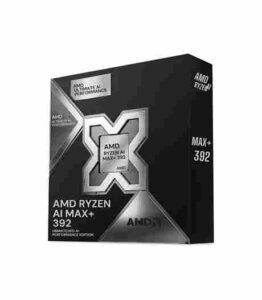
8. AMD Ryzen AI Max+ 392
AMD announced the Ryzen AI Max+ 392 at CES 2026 as a new addition to its Strix Halo APU family. It combines 12 Zen 5 CPU cores with the full Radeon 8060S integrated GPU (40 compute units) and up to 128 GB of unified LPDDR5X memory. The unified memory architecture is the key differentiator: both the CPU and GPU share the same physical memory pool, allowing large AI models to access GPU-class memory without the bandwidth constraints of a discrete GPU PCIe connection.
Per AMD’s CES 2026 press release, systems powered by the Ryzen AI Max+ 392 became available from Acer, ASUS, and other OEMs in Q1 2026. AMD confirmed desktop Ryzen AI 400 series availability for Q2 2026.
Specifications and Value (Explanation)
Announced January 5, 2026 (CES) and released in Q1 2026, this chip combines strong CPU, powerful integrated GPU, and unified memory—making it ideal for AI and heavy GPU workloads without a dedicated GPU.
Key Points
- Release: Q1 2026 (CES Jan 5)
- 12 cores / 24 threads
- Radeon 8060S (40 CU)
- ~60 TFLOPS GPU power
- Up to 128GB unified memory
- 50 TOPS NPU
- OEM systems only
| Pros | Cons |
|---|---|
| Very powerful iGPU (RTX 4060–4070 level) | OEM-only |
| Huge unified memory (128GB) | Expensive systems |
| Strong AI performance | Thermal limits in thin devices |
| No GPU needed | Gaming depends on cooling |
| Great for AI & creators | Not DIY-friendly |
Best Use Case: AI developers, data scientists, and professionals needing strong GPU-accelerated compute and large memory capacity in a portable or compact form factor.
9. AMD Ryzen AI Max+ 388
The Ryzen AI Max+ 388 is the 8-core sibling of the 392. It carries the same full 40-CU Radeon 8060S integrated GPU and identical unified memory support up to 128 GB the only reduction is CPU core count (8 vs 12). Per ServeTheHome’s CES 2026 coverage, AMD designed the 388 for ultra-thin laptops and compact mini-PCs where a lower thermal budget makes the 12-core 392 impractical.
Specifications
Released in Q1 2026, this is a lower-core version of the 392. It keeps the same powerful GPU and memory system but is optimized for thin devices with lower power requirements.
Key Points
- Release: Q1 2026 (CES Jan 5)
- 8 cores / 16 threads
- Same Radeon 8060S GPU
- Up to 128GB unified memory
- Lower power design
- OEM-only
| Pros | Cons |
|---|---|
| Same GPU as 392 | Fewer CPU cores |
| Excellent for compact systems | Slower in heavy workloads |
| Strong AI performance | OEM-only |
| Better efficiency | Thermal limits possible |
| Portable workstation option | Not upgradeable |
Best Use Case: Compact mini-PCs, ultra-portable workstations, and AI-focused handheld devices where portability is more important than peak CPU thread count.
Workstation CPUs
Important: Xeon 600 series CPUs require Intel’s new W890 chipset platform on LGA 4710 socket. They are not compatible with any consumer LGA 1851 motherboard. Announced February 2, 2026; retail availability started late March 2026.
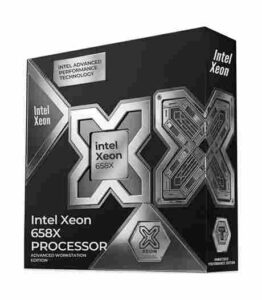
10. Intel Xeon 658X (Xeon 600 Series — Mid-Range Workstation)
Intel announced the entire Xeon 600 series on February 2, 2026, with retail availability through new W890 platform motherboards starting late March. The Xeon 600 series brings Granite Rapids architecture — Intel’s current server silicon — to desktop workstations for the first time, replacing the aging Xeon W-3500/W-2500 (Sapphire Rapids-WS) lineup.
Per Intel’s own benchmark data (Cinebench 2026): 61% higher multithreaded performance and 9% better single-threaded performance vs the previous Xeon W-3500 series. A key addition is FP16 support in Intel’s AMX (Advanced Matrix Extensions) matrix math hardware — previous Xeon workstation chips only supported BF16 and INT8 in AMX. FP16 is the default datatype in PyTorch and TensorFlow, reducing data conversion overhead in AI workloads.
The full Xeon 600 lineup spans 11 SKUs from the 12-core Xeon 634 ($499) to the 86-core Xeon 698X ($7,699). Five SKUs are available as retail boxed parts (per ServeTheHome); the rest are OEM-only system parts.
Specifications and Value (Explanation)
Announced February 2, 2026 and released late March 2026, this workstation CPU brings server-level performance to desktops with 48 cores, massive memory support, and AI acceleration features.
Key Points
- Announced: Feb 2, 2026
- Released: Late March 2026
- 48 cores / 96 threads
- 8-channel DDR5 (up to 4TB RAM)
- 128 PCIe Gen5 lanes
- FP16 AI acceleration
- W890 platform only
| Pros | Cons |
|---|---|
| Massive 48-core power | Needs new platform |
| 128 PCIe lanes | Very expensive setup |
| AI acceleration (FP16 AMX) | High system cost |
| ECC memory support | Limited single-core gain |
| Workstation-grade features | Not for normal users |
Best Use Case: Professional workstations for content creation studios, engineering simulation, scientific computing, financial modeling, multi-stream video production, and AI-adjacent development.
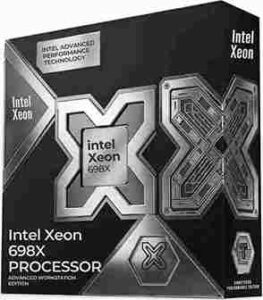
11. Intel Xeon 698X (Xeon 600 Series — Flagship Workstation)
The Xeon 698X is Intel’s flagship 2026 workstation processor. It uses three XCC compute dies in a single package for 86 cores and 172 threads — the highest core count of any Intel workstation CPU. Its 336 MB of L3 cache is among the largest on any single-socket processor currently available.
Intel reports (vs the outgoing Xeon w9-3595X): 74% faster Blender Junkshop render, 17% better AI score, 22% improvement in energy subcategory, 61% improvement in financial services on SPEC Workstation 4.0.
The $7,699 MSRP represents a major value improvement over AMD’s competing Threadripper PRO 9995WX, which is priced at $11,699 — over $4,000 less for broadly competitive workstation positioning, per TechSearcher’s coverage.
Specifications
Announced February 2, 2026 and released late March 2026, this is Intel’s most powerful workstation CPU with 86 cores, designed for extreme workloads like AI, simulation, and rendering.
Key Points
- Announced: Feb 2, 2026
- Released: Late March 2026
- 86 cores / 172 threads
- 336 MB cache
- 350W TDP
- 128 PCIe Gen5 lanes
- Enterprise-grade performance
| Pros | Cons |
|---|---|
| 86 cores (extreme power) | Very expensive ($7,699) |
| Huge cache (336 MB) | Needs enterprise cooling |
| Best for rendering & AI | High total system cost |
| 128 PCIe lanes | Not consumer-friendly |
| Strong workstation value | Limited availability |
Best Use Case: Professional VFX studios, AI research, scientific computing, molecular simulation, large Blender and V-Ray rendering pipelines, and any workload requiring maximum single-socket compute from Intel in 2026.
Quick Navigation
What Makes a Good CPU in 2026?
Not all CPUs are built for the same job. Before comparing specs, understand the five factors that actually determine real-world performance in 2026.
Core Count
Gaming runs efficiently on 8 high-quality cores. Push beyond that and you hit diminishing returns for pure frame rates. Productivity is a different story, video editing, 3D rendering, and live streaming reward 12 to 24 cores significantly. Intel’s Arrow Lake Refresh addresses both demands simultaneously through its hybrid P-core + E-core architecture: performance cores handle demanding tasks while efficiency cores absorb background workloads without stealing clock speed from your game.
Cache Size
Raw clock speed doesn’t tell the full story. AMD’s 3D V-Cache technology physically stacks extra SRAM directly onto the CPU die, dramatically cutting the time it takes to fetch game data. This is the single biggest reason AMD’s X3D chips dominate gaming benchmarks in 2026. The principle is straightforward: more cache means lower latency, lower latency means faster data delivery, and faster data delivery means higher, more consistent frame rates — particularly in CPU-bound and competitive titles.
Memory Platform
Every 2026 desktop CPU from both AMD and Intel runs exclusively on DDR5. There is no DDR4 fallback on modern platforms. Intel’s Arrow Lake Refresh supports up to DDR5-7200 natively, giving it a meaningful bandwidth advantage in latency-sensitive workloads. AMD’s Ryzen 9000 series officially supports DDR5-5600, though EXPO profiles allow higher-speed kits. One important note: DDR5 prices remain elevated in 2026. Factor memory cost into your total build budget before committing to a platform.
Socket Longevity
Your CPU socket determines your upgrade path. AMD’s AM5 socket is confirmed supported through at least 2027, with strong indications of 2028 compatibility — meaning a CPU purchased today can be replaced with a future Ryzen chip on the same motherboard. Intel’s LGA 1851 for Arrow Lake Refresh does not offer the same security. Intel has already confirmed that Nova Lake, its next-generation architecture, will require the entirely new LGA 1954 socket. If long-term platform value matters to your decision, this distinction is significant.
TDP and Cooling
Power draw directly determines your cooling requirements and long-term system stability. The Ryzen 9 9950X3D2 pulls 200W at full load — AMD officially recommends a 360mm AIO cooler as the minimum. Ignoring this will result in thermal throttling and degraded performance. The Ryzen 7 9850X3D operates at 120W, and Intel’s Core Ultra 5 250K Plus sits at 125W base — both manageable with a quality 240mm AIO or a high-end air cooler. Always match your cooling solution to your CPU’s actual TDP, not its marketing tier.
Conclusion
Choosing the right CPU in 2026 comes down to one thing: matching the chip to your actual workload.
AMD dominates pure gaming through 3D V-Cache technology; the Ryzen 7 9850X3D remains unmatched for frame rates at its price. Intel fights back with exceptional core counts and unbeatable value, making the 270K Plus the smartest all-around desktop chip released this year.
For creators, the 9950X3D2 eliminates every compromise. For budget builders, the 250K Plus overdelivers at $199. For professionals, the Xeon 600 series redefines single-socket workstation performance.
No single CPU wins everything. The best processor is the one built for how you actually use your machine every day, not just on benchmark day.
Frequently Asked Questions
AMD vs Intel for gaming, which is better in 2026?
AMD leads pure gaming with 3D V-Cache delivering higher FPS and smoother frame times, while Intel offers better multitasking and productivity performance with higher core counts, making it a balanced choice for mixed workloads.
Why is AMD 3D V-Cache important?
AMD 3D V-Cache adds extra L3 cache stacked on the CPU, reducing memory latency and improving data access speed, resulting in higher FPS, better consistency, and smoother gameplay in CPU-heavy and competitive gaming scenarios.
What is Intel Binary Optimization Tool (BOT)?
Intel BOT is software that optimizes game code in real time, improving CPU efficiency without modifying files, delivering up to around 15% average FPS gains, depending on the game engine and workload conditions.
What sockets do 2026 CPUs use?
AMD uses the AM5 socket across all Ryzen 9000 CPUs, ensuring compatibility and upgrades, while Intel uses LGA 1851 for Arrow Lake Refresh, but it has limited future support compared to AMD platform longevity.
Should you upgrade now or wait?
Upgrade now if your system struggles with modern games or workloads, as current CPUs are powerful, but if performance is still acceptable, waiting for next-gen CPUs in 2027 could bring better long-term value.
Do 2026 desktop CPUs support DDR4?
No, all 2026 desktop CPUs from AMD and Intel require DDR5 memory, offering higher bandwidth and efficiency, while DDR4 is only supported on older platforms like AM4 and LGA 1700, now considered outdated.
Can you buy mobile CPUs like Panther Lake separately?
No, mobile CPUs like Panther Lake and Ryzen AI chips are soldered onto laptops or mini PCs, meaning they are not available as standalone desktop processors and cannot be upgraded or purchased separately.
