
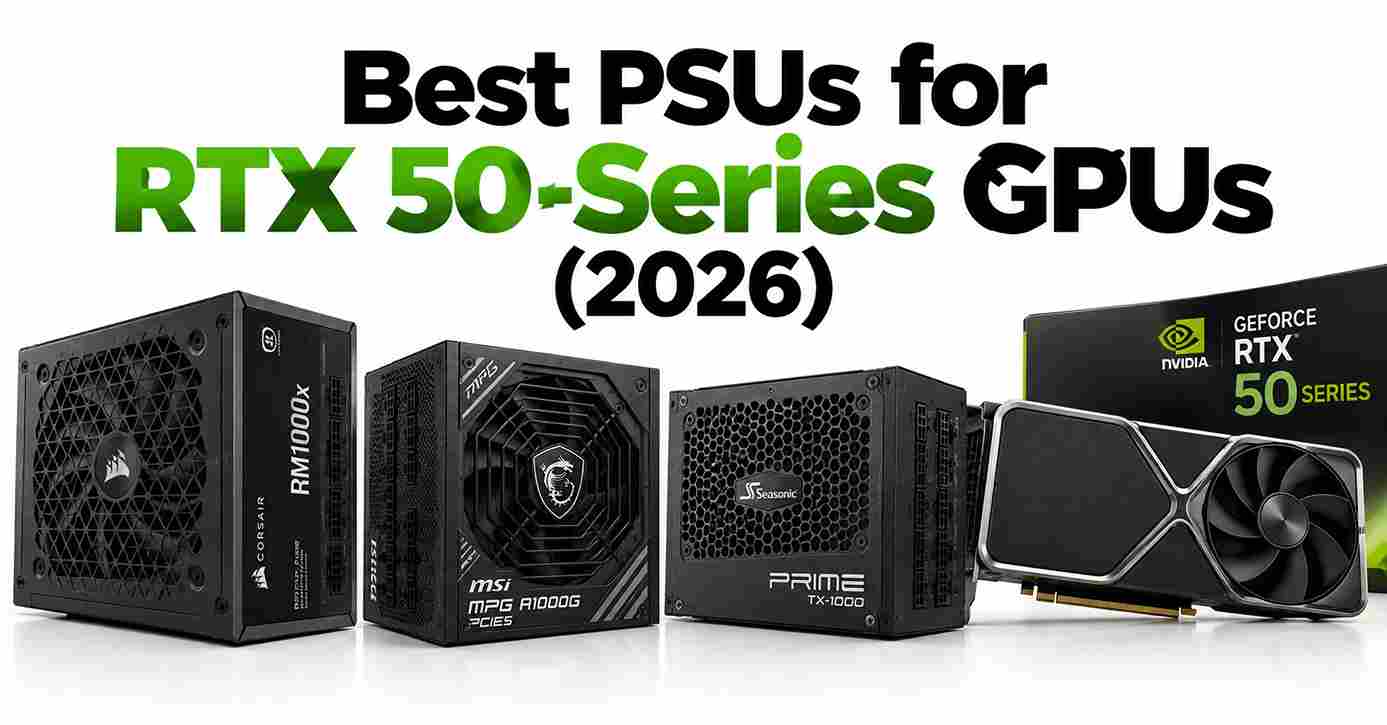
Choosing the best PSU for RTX 50-series graphics cards is not the place to cut corners. NVIDIA’s RTX 50-series GPUs use the 12V-2×6 (and earlier 12VHPWR) power connector, and they can draw sharp transient power spikes that punish undersized or outdated power supplies. The right PSU for a 2026 build is ATX 3.1-rated, has a native 12V-2×6 cable, and is sized with real headroom — not just the minimum on the box.
This guide compares six current power supplies suited to RTX 50-series builds, from 850W units for RTX 5070 systems to 1000W+ models for RTX 5080 and 5090 rigs. Every pick is fully modular, 80 PLUS Gold or better, and built for the ATX 3.x standard.
Quick Picks: Best PSUs for RTX 50-Series at a Glance
| Category | Pick | Wattage | Efficiency |
|---|---|---|---|
| Best Overall | Corsair RM1000x (2024) | 1000W | 80+ Gold |
| Best Value | MSI MPG A1000G PCIE5 | 1000W | 80+ Gold |
| Best Budget | Thermaltake Toughpower GF A3 850W | 850W | 80+ Gold |
| Best Premium | ASUS ROG Thor 1000W Platinum III | 1000W | 80+ Platinum |
| Best Efficiency | be quiet! Dark Power 13 1000W | 1000W | 80+ Titanium |
| Also Great | Seasonic FOCUS GX-1000 ATX 3.1 | 1000W | 80+ Gold |
1. Corsair RM1000x (2024) — Best Overall
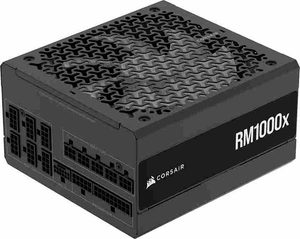
| Spec | Details |
|---|---|
| Wattage | 1000W |
| Efficiency | 80 PLUS Gold |
| ATX Version | ATX 3.1 / PCIe 5.1 |
| GPU Connector | Native 12V-2×6 |
| Modular | Fully modular |
| Price | $169 |
The Corsair RM1000x (2024 refresh) is the safest all-around pick for RTX 50-series builds. It’s ATX 3.1 rated with a native 12V-2×6 cable — no adapters, no dongles — and 1000W covers everything from an RTX 5070 Ti up to an RTX 5080 with comfortable headroom. Corsair’s RMx line has a long track record for voltage stability and quiet operation, and the 2024 update brings it fully into the PCIe 5.1 era.
Best for: Most RTX 50-series builders who want a proven, quiet 1000W PSU with native 12V-2×6 support.
Pros:
- ATX 3.1 with native 12V-2×6 cable included
- 1000W handles RTX 5070 Ti through RTX 5080 builds
- 80 PLUS Gold efficiency, fully modular
- Corsair’s strong reputation for reliability and support
Cons:
- Not enough for an RTX 5090 with a flagship CPU — size up to 1200W
- Premium over budget 1000W units
- ATX (not SFX) — confirm case fit for compact builds
Who should NOT buy this: RTX 5090 builders (get 1200W+) and ultra-budget builds where a good 850W ATX 3.0 unit saves money.
2. MSI MPG A1000G PCIE5 — Best Value
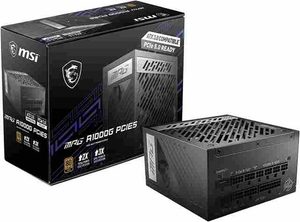
| Spec | Details |
|---|---|
| Wattage | 1000W |
| Efficiency | 80 PLUS Gold |
| ATX Version | ATX 3.0 / PCIe 5.0 |
| GPU Connector | Native 12VHPWR |
| Modular | Fully modular |
| Price | $89 |
The MSI MPG A1000G PCIE5 delivers 1000W of ATX 3.0 power with a native 12VHPWR cable, often at a lower price than ATX 3.1 competitors. For RTX 50-series cards, the 12VHPWR connector is electrically compatible with 12V-2×6 GPUs — the newer connector mainly improves the latch and mating. If you want 1000W without the ATX 3.1 price premium, this is the value sweet spot.
Best for: Value-focused builders who want 1000W and a native next-gen GPU cable for less.
Pros:
- 1000W, 80 PLUS Gold, fully modular at a value price
- Native 12VHPWR cable — no adapter needed for RTX 50-series
- ATX 3.0 handles GPU transient spikes per spec
Cons:
- ATX 3.0, not 3.1 — lacks the 12V-2×6 connector revision
- Less premium component story than Corsair/Seasonic flagships
- Cable quality a step below top-tier units
Who should NOT buy this: Buyers who specifically want the 12V-2×6 connector revision — get an ATX 3.1 unit instead. Also not for RTX 5090 builds.
3. Thermaltake Toughpower GF A3 850W — Best Budget
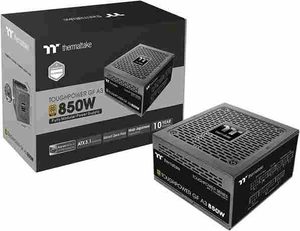
| Spec | Details |
|---|---|
| Wattage | 850W |
| Efficiency | 80 PLUS Gold |
| ATX Version | ATX 3.0 / PCIe 5.0 |
| GPU Connector | Native 12VHPWR |
| Modular | Fully modular |
| Price | $129 |
For RTX 5070 and 5070 Ti builds, 850W is plenty — and the Thermaltake Toughpower GF A3 850W is one of the most affordable ways to get ATX 3.0 with a native 12VHPWR cable. It’s 80 PLUS Gold, fully modular, and rated for the transient loads that trip older designs. Don’t overspend on 1000W if your GPU doesn’t need it.
Best for: RTX 5070/5070 Ti builders who want a modern, safe PSU at the lowest sensible price.
Pros:
- 850W is the right size for RTX 5070-class builds — no wasted capacity
- ATX 3.0 with native 12VHPWR cable
- 80 PLUS Gold, fully modular
- Often the cheapest reputable ATX 3.0 option
Cons:
- Not enough headroom for RTX 5080/5090
- ATX 3.0 rather than 3.1
- Fan can be audible under heavy load
Who should NOT buy this: Anyone planning an RTX 5080 or higher — size up to 1000W. Also skip if you want the quietest operation.
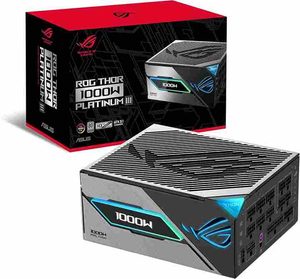
4. ASUS ROG Thor 1000W Platinum III — Best Premium
| Spec | Details |
|---|---|
| Wattage | 1000W |
| Efficiency | 80 PLUS Platinum |
| ATX Version | ATX 3.1 / PCIe 5.1 |
| GPU Connector | Native 12V-2×6 |
| Modular | Fully modular |
| Price | $389 |
The ROG Thor 1000W Platinum III is ASUS’s flagship PSU: 80 PLUS Platinum efficiency, ATX 3.1, native 12V-2×6, and the signature OLED power display that shows real-time wattage. Platinum efficiency means less waste heat and lower fan speeds. It’s overkill for most builds, but if you want the best — and a PSU that looks the part in a showcase build — this is it.
Best for: Enthusiasts building premium RTX 5080 systems who want top efficiency and don’t mind paying for it.
Pros:
- 80 PLUS Platinum — higher efficiency, less heat
- ATX 3.1 with native 12V-2×6
- OLED display shows live power draw
- Premium components and long warranty [VERIFY warranty length]
Cons:
- Significantly more expensive than Gold-rated 1000W units
- The OLED display is a luxury, not a necessity
- Large — verify clearance in compact cases
Who should NOT buy this: Value builders — a good Gold 1000W unit powers the same GPU for less. The efficiency savings won’t pay back the premium for most users.
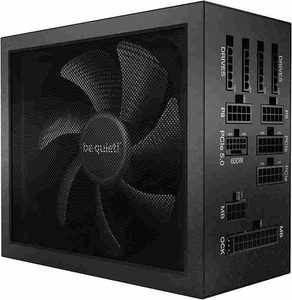
5. be quiet! Dark Power 13 1000W — Best Efficiency
| Spec | Details |
|---|---|
| Wattage | 1000W |
| Efficiency | 80 PLUS Titanium |
| ATX Version | ATX 3.0 / PCIe 5.0 |
| GPU Connector | Native 12VHPWR |
| Modular | Fully modular |
| Price | $219 |
The be quiet! Dark Power 13 1000W holds the highest efficiency rating in this guide — 80 PLUS Titanium — and lives up to the brand name with exceptionally quiet operation. It’s ATX 3.0 with native 12VHPWR, fully modular, and built for systems where noise matters as much as power. Titanium efficiency also means minimal waste heat dumped into your case.
Best for: Quiet-PC builders and anyone who values top efficiency for an RTX 5080-class system.
Pros:
- 80 PLUS Titanium — the highest efficiency tier
- Extremely quiet operation
- Native 12VHPWR, fully modular
- Excellent voltage regulation
Cons:
- Titanium premium — poor value if you only care about watts
- ATX 3.0, not 3.1
- Less widely available than Corsair/Seasonic in some regions [VERIFY]
Who should NOT buy this: Budget builds — you pay a lot for the Titanium badge. Gamers who don’t care about noise should save money with a Gold unit.
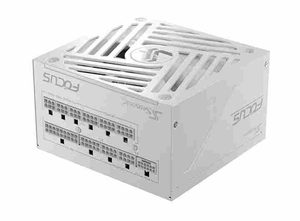
6. Seasonic FOCUS GX-1000 ATX 3.1 — Also Great
| Spec | Details |
|---|---|
| Wattage | 1000W |
| Efficiency | 80 PLUS Gold |
| ATX Version | ATX 3.1 / PCIe 5.1 |
| GPU Connector | Native 12V-2×6 |
| Modular | Fully modular |
| Price | $124 |
Seasonic’s FOCUS GX-1000 (ATX 3.1 version) is the connoisseur’s pick — Seasonic builds units for other brands, and their own FOCUS line is consistently among the best-reviewed PSUs available. The ATX 3.1 update adds the 12V-2×6 connector and updated transient handling. If you trust the OEM behind the label, buy the label.
Best for: Builders who want a top-tier OEM’s own-brand unit with ATX 3.1 and 12V-2×6.
Pros:
- Seasonic build quality — among the best in the industry
- ATX 3.1 with native 12V-2×6
- 1000W, 80 PLUS Gold, fully modular
- Strong warranty support [VERIFY length]
Cons:
- Often priced at a premium over similar Gold units
- Availability can be spotty [VERIFY]
- No standout extra features versus the Corsair RM1000x
Who should NOT buy this: Shoppers who won’t pay extra for the Seasonic name — the MSI and Thermaltake picks deliver the same wattage for less.
PSU Buying Guide: How to Choose for RTX 50-Series
Size by your GPU, then add headroom
Use NVIDIA’s recommendations as a floor: 650W for RTX 5070, 750W for RTX 5070 Ti, 850W for RTX 5080, 1000W for RTX 5090 — then add 100-150W if you run a flagship CPU or plan to overclock. An 850W PSU for a 5070 build or 1000W for a 5080 build is the sweet spot for most.
ATX 3.1 with native 12V-2×6 is the target
ATX 3.1 PSUs include the revised 12V-2×6 GPU connector and are tested against the transient spikes that define modern GPUs. ATX 3.0 units with 12VHPWR are compatible and safe, but 3.1 is the current standard — buy it for a new build.
80 PLUS Gold is the value sweet spot
Gold efficiency (87-90% at typical loads) is where price and efficiency balance. Platinum and Titanium run cooler and quieter but rarely pay back their premium in electricity savings for a gaming PC.
Always fully modular
Every pick here is fully modular. For a 2026 build there’s no reason to accept fixed cables — modular means cleaner builds, better airflow, and easier cable management.
Don’t reuse an old PSU blindly
An older ATX 2.x PSU can work with adapter cables, but it wasn’t designed for 50-series transient spikes and lacks the native connector. If your PSU predates ATX 3.0, replace it with the GPU.
Common Mistakes to Avoid
- Buying exactly the minimum wattage. Transient spikes can trip an undersized PSU even if average draw looks fine — headroom is protection.
- Using three 8-pin adapters instead of a native cable. Adapters work, but a native 12V-2×6/12VHPWR cable is cleaner and more reliable.
- Ignoring the 12V rail. Modern GPUs pull almost everything from 12V — check the PSU’s 12V rating, not just total wattage.
- Assuming all “1000W” units are equal. A cheap 1000W with poor transient response is worse than a quality 850W. Stick to reputable lines.
- Forgetting case fit. High-wattage ATX units run long (180mm+) — verify PSU length against your case’s spec.
Conclusion
The best power supply for an RTX 50-series build is a fully modular, ATX 3.1-rated unit with a native 12V-2×6 cable, sized above NVIDIA’s minimum wattage. For most RTX 5080 and RTX 5070 Ti systems, the Corsair RM1000x (2024), a 1000W 80 PLUS Gold unit, is our best overall pick.
Quick verdict:
- RTX 5070 / 5070 Ti: Thermaltake Toughpower GF A3 850W
- RTX 5080: Corsair RM1000x or Seasonic FOCUS GX-1000
- Best value: MSI MPG A1000G PCIE5
- Premium or quiet: ASUS ROG Thor Platinum III or be quiet! Dark Power 13
- RTX 5090: A 1200W+ ATX 3.1 unit
Before buying, run your parts through an online PSU calculator to estimate total draw, then add 100-150W of headroom for transient spikes. Choose a native cable over adapters, and replace any PSU that predates ATX 3.0 when you upgrade your GPU. upgrade your GPU. It wasn’t built for 50-series power spikes or the native connector.
Frequently Asked Questions
What wattage PSU do I need for an RTX 5080?
NVIDIA recommends 850W for the RTX 5080, but 1000W is the safer choice. The extra 150W covers transient spikes and a high-end CPU, and it keeps the PSU in its efficient load range.
What PSU do I need for an RTX 5090?
NVIDIA recommends at least 1000W for the RTX 5090. Choose 1200W or more if you pair it with a flagship CPU or plan to overclock, and use a native ATX 3.1 12V-2×6 cable.
Is 850W enough for an RTX 5070 or 5070 Ti?
Yes. NVIDIA recommends 650W for the RTX 5070 and 750W for the RTX 5070 Ti, so a quality 850W PSU gives comfortable headroom without paying for unused capacity.
Is ATX 3.0 enough, or do I need ATX 3.1?
ATX 3.0 with a native 12VHPWR cable works with RTX 50-series cards. ATX 3.1 adds the revised 12V-2×6 connector and updated transient requirements. Buy 3.1 for a new build, but don’t replace a working 3.0 unit just for the revision.
What is the difference between 12VHPWR and 12V-2×6?
Both connectors carry the same 12V power electrically. 12V-2×6 shortens the sense pins and lengthens the power terminals, so the plug seats more fully and is less likely to be partially inserted. RTX 50-series cards use 12V-2×6, and 12VHPWR cables are physically compatible.
Can I use an adapter instead of a native 12V-2×6 cable?
Yes, if the adapter is from a reputable source and your PSU has enough wattage and 8-pin connectors. A native cable is still cleaner, more reliable, and one less point of failure.
Can I reuse my old power supply with an RTX 50-series GPU?
Only if it has enough wattage and the right connectors or adapter. PSUs older than ATX 3.0 weren’t validated for modern GPU transient spikes, so a new ATX 3.x PSU is the safer pairing.
Is 80 PLUS Gold good enough, or should I buy Platinum or Titanium?
Gold is enough for most gaming PCs. Platinum and Titanium offer a few percent more efficiency, which means less heat and quieter fans, but the electricity savings take years to cover the price premium.
Why does my PSU need extra headroom beyond the GPU’s rated power?
Modern GPUs briefly draw far more than their average power. An undersized PSU can shut down under these spikes even when average load looks safe. Headroom of 100-150W above the recommended wattage prevents that.
How do I know if a PSU will fit my case?
Check the PSU’s length against your case’s maximum PSU length. High-wattage ATX units often run 160-180mm or longer, and the shroud and cable clearance can reduce usable space in compact cases.
