
Valve Corporation, an American video game and digital distribution company, was established in 1996 by Gabe Newell and Mike Harrington, both former Microsoft employees with strong software development expertise. Gabe Newell’s vision was to reshape the gaming industry through innovation and high-quality experiences. Valve’s debut game, Half-Life (1998), became a milestone in gaming, setting new standards for storytelling and gameplay. In 2003, the company launched Steam, revolutionizing game distribution and creating a massive revenue stream. With blockbuster titles like Counter-Strike and Dota 2, alongside the successful Steam Deck (2022), Valve became a billion-dollar company, valued at around $10 billion, leaving a lasting impact on the gaming community in the USA and worldwide.
Valve’s Early Game Development (1996-2000)
1996: Valve Corporation Founded
Valve Corporation was founded in 1996 by Gabe Newell and Mike Harrington in Bellevue, Washington. Both were former Microsoft employees who envisioned creating a company that could revolutionize the gaming industry with innovative ideas and groundbreaking technology. Valve’s first few years focused on building a solid foundation for future game development.
1998: Release of Half-Life
In 1998, Valve made its industry debut with the release of Half-Life. This first-person shooter was a game-changer that combined exceptional storytelling with action-packed gameplay, setting a new standard for FPS games. Half-Life not only became a commercial success but also won over 50 game of the year awards, making Valve a respected name in the gaming world.
1999: Launch of Team Fortress Classic
In 1999, Valve released Team Fortress Classic, a multiplayer-focused game based on team-based combat. It became an instant hit, contributing to Valve’s growing reputation in the multiplayer gaming space. The game’s success led to several iterations and helped lay the foundation for Valve’s later multiplayer successes, such as Counter-Strike.
2000: Introduction of Counter-Strike
In 2000, Valve partnered with the creators of Counter-Strike, a modification of Half-Life, and officially released it as a standalone title. Counter-Strike became one of the most popular competitive multiplayer games, laying the groundwork for esports and building a loyal fanbase. It was instrumental in Valve’s rise as a major force in the gaming industry.
Digital Distribution & Key Titles (2003-2007)
In 2003, Valve introduced Steam, a groundbreaking digital distribution platform that forever changed how video games were sold and played. Unlike traditional physical copies, Steam allowed users to purchase, download, and update games online, making it more convenient and accessible. Over time, Steam expanded beyond just a platform for Valve games and became a hub for third-party developers, offering millions of games and downloadable content (DLC). This innovation eliminated the need for physical media and set the stage for digital gaming’s dominance, making Steam the largest digital storefront in the world.
The Release of Half-Life 2 (2004)
In 2004, Valve released Half-Life 2, a title that pushed the boundaries of video game technology. The game set new standards in physics, artificial intelligence (AI), and graphics, revolutionizing first-person shooters. With the groundbreaking Havok physics engine, players could interact with the environment in ways never seen before, adding a new layer of immersion. The AI was far ahead of its time, offering smarter enemies that adapted to player actions. Half-Life 2 is considered one of the greatest games of all time and helped establish Valve as a leader in the gaming industry.
Valve’s Iconic Launches in (2007)
In 2007, Valve launched Team Fortress 2, an online multiplayer shooter that blended humor with action. With its distinctive art style and class-based mechanics, Team Fortress 2 quickly became a favorite in the multiplayer gaming community, offering intense, team-oriented gameplay and regular content updates.
Portal and Left 4 Dead
Also in 2007, Valve released Portal and Left 4 Dead, two highly acclaimed titles that broadened its portfolio. Portal introduced innovative puzzle-solving mechanics, while Left 4 Dead offered intense cooperative gameplay in a zombie apocalypse setting. Both titles were lauded for their creativity and uniqueness, solidifying Valve’s reputation for groundbreaking game design.
Valve’s Genre Expansion & Steam Growth (2008-2012)
Valve Corporation experienced significant growth between 2008 and 2012, expanding into new genres and refining its digital platform, Steam. This period solidified Valve as a leading innovator in the gaming industry.
2008: Released Left 4 Dead 2 – A Success in Cooperative Gameplay
In 2008, Valve released Left 4 Dead 2, the sequel to the highly successful Left 4 Dead. This game introduced improved cooperative gameplay, where players worked together to survive waves of zombies. The game was praised for its fast-paced action and replayability, attracting a larger multiplayer audience. Left 4 Dead 2 became a major hit, continuing Valve’s success in the cooperative gaming genre.
2011: Launched Portal 2 – A Puzzle Masterpiece
In 2011, Valve launched Portal 2, a critically acclaimed sequel to Portal. The game featured innovative puzzles based on the portal gun mechanic, combined with a captivating storyline and witty dialogue. Portal 2 was praised for its clever puzzles and narrative depth, offering both new and seasoned players an exciting experience. It showcased Valve’s ability to blend engaging gameplay with a rich narrative, making it one of the most beloved games of its time.
2012: Released Dota 2 – Dominating the MOBA Space
In 2012, Valve entered the rapidly growing Multiplayer Online Battle Arena (MOBA) genre with Dota 2. This game became a cornerstone of the esports scene, with millions of players globally. Dota 2 solidified Valve’s reputation as a leader in competitive gaming, offering players a complex yet rewarding gameplay experience. Its massive success led to The International, Valve’s premier esports tournament, becoming one of the largest and most prestigious events in the world.
Valve Hardware & VR Innovations (2013-2016)
2013: Steam Workshop Empowers the Gaming Community
In 2013, Valve introduced the Steam Workshop, a platform that allowed gamers to create, share, and download user-generated content, including mods, skins, and custom levels. This tool revolutionized how games were played, offering players the chance to expand and personalize their favorite titles. The Steam Workshop played a key role in fostering creativity within the gaming community and enhancing player engagement, making it a game-changing addition to Valve’s platform.
2014: Steam Machines and Steam Controller
Valve took a bold step into hardware in 2014 with the announcement of Steam Machines, a series of gaming PCs designed to bring the Steam experience to the living room. Alongside this, they introduced the Steam Controller, a revolutionary controller designed to enhance gameplay with a customizable layout and innovative touchpads. Steam Machines aimed to bridge the gap between PC gaming and traditional consoles, while the Steam Controller provided a new level of precision and flexibility, offering a more immersive gaming experience.
2015: Entering Virtual Reality with SteamVR and HTC Vive
In 2015, Valve made a groundbreaking leap into virtual reality (VR) with the launch of SteamVR and its partnership with HTC Vive. This marked Valve’s commitment to immersive gaming experiences, with SteamVR powering the HTC Vive, one of the first fully immersive VR systems for gamers. The HTC Vive featured room-scale VR, allowing players to physically move within their virtual environments. This innovation set the stage for VR gaming’s growth and established Valve as a leader in the industry’s next frontier.
2016: The Lab – Showcasing Virtual Reality Technology
In 2016, Valve released The Lab, a free virtual reality experience built for the HTC Vive. This collection of mini-games and interactive VR experiences showcased the potential of VR technology. It served as both an introduction to the immersive world of VR for new users and a way for enthusiasts to explore VR’s capabilities, helping Valve solidify its position as a major player in the virtual reality space.
Esports, VR, and Innovation (2017-2020)
2017: The International – A Major Esports Milestone
In 2017, Valve cemented its position as a leading esports organizer by hosting The International, the world’s most prestigious Dota 2 esports event. This annual tournament not only attracted millions of viewers but also featured record-breaking prize pools, highlighting Valve’s ability to shape competitive gaming on a global scale. The International became a symbol of Valve’s commitment to esports, fostering a thriving competitive Dota 2 community and elevating the esports ecosystem.
2018: Release of Artifact – Valve’s Foray into Digital Card Games
In 2018, Valve ventured into the digital collectible card game genre with the release of Artifact. Based on the Dota 2 universe, Artifact introduced new mechanics but received mixed reviews due to its complex system and in-game monetization. While Artifact failed to replicate the success of other Valve games, it marked the company’s experimental approach to diversifying its gaming portfolio and exploring different genres.
2019: Valve Index – Expanding into Virtual Reality
In 2019, Valve introduced the Valve Index, a premium virtual reality (VR) headset designed to offer an immersive gaming experience. With a high refresh rate and excellent field-of-view, the Valve Index became a top choice for VR enthusiasts. This move signified Valve’s serious entry into the VR hardware market, aiming to push the boundaries of immersive gaming with its cutting-edge technology.
2020: Half-Life: Alyx – A Groundbreaking VR Experience
In 2020, Valve revitalized the Half-Life series with the release of Half-Life: Alyx, a VR-exclusive title. The game garnered widespread critical acclaim for its innovative use of virtual reality, breathtaking visuals, and intricate storytelling. Half-Life: Alyx not only revitalized the Half-Life franchise but also pushed virtual reality gaming forward, proving that VR could deliver AAA-quality experiences.
Handheld Gaming Innovation (2021-2025)
2021: Steam Deck Launch – A New Era in Portable Gaming
In 2021, Valve revolutionized handheld gaming with the release of the Steam Deck. This portable gaming device allows players to access their entire Steam library on the go, offering a powerful gaming experience similar to traditional gaming PCs but in a compact, handheld form. With its customizable controls and impressive hardware, the Steam Deck made it possible to play AAA games anywhere, giving players unprecedented mobility without sacrificing performance.
2022: Steam Deck’s Ongoing Success
Valve’s Steam Deck continued its strong performance in 2022. Its success solidified Valve’s position in the handheld gaming market. The device’s ability to run PC games seamlessly, combined with regular software updates, expanded compatibility, and growing third-party support, made it a favorite among gaming enthusiasts. The Steam Deck’s growing community of users and positive reviews helped cement its reputation as one of the best handheld gaming devices available.
2023: Expanding Steam’s Global Reach
In 2023, Valve focused on expanding Steam’s global reach. With an increasing active user base, Steam became the leading platform for PC gaming worldwide. Valve continued to form strategic partnerships to improve Steam’s services, enhance content delivery, and boost global sales. These efforts helped strengthen Steam’s ecosystem, ensuring a better experience for both developers and gamers across the globe.
2024-2025: Anticipating Growth and New Innovations
Looking ahead to 2024 and 2025, Valve is poised for continued growth. New hardware is expected to build upon the Steam Deck’s success, while potential VR gaming innovations could push the boundaries of immersive gaming. Valve’s commitment to enhancing both handheld and virtual reality gaming ensures that the company will remain a key player in the gaming industry, bringing fresh experiences to gamers worldwide.
Conclusion
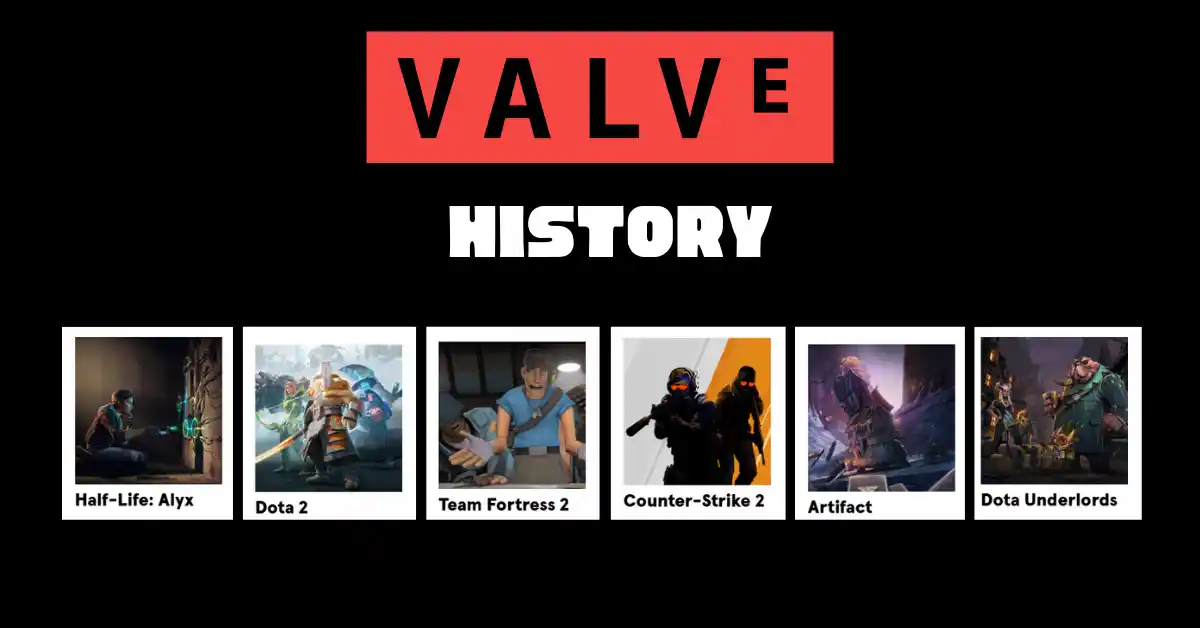
Valve’s future is bright, with continued growth in handheld gaming, virtual reality, and new hardware innovations. The company’s success plays an important role in the U.S. economy, especially in tech, gaming, and digital distribution. By creating jobs and supporting growth in digital platforms, Valve helps boost economic progress. Valve operates in many countries, with its products most popular in the U.S., China, and Germany. Top games like Half-Life: Alyx, Dota 2, Counter-Strike 2, Dota Underlords, Artifact, and Team Fortress 2 will evolve with updates and esports growth. These iconic titles will continue to be enhanced with new features, keeping gamers engaged. As Valve keeps expanding, these games will remain central to its global impact on the gaming industry and economy.
Frequently Asked Questions
1. What is Valve Corporation known for?
Valve Corporation is celebrated for its trailblazing approach to game development and digital distribution. With its renowned Steam platform and iconic titles like Half-Life, Dota 2, and Counter-Strike, Valve has redefined the gaming experience by focusing on innovation, immersive storytelling, and high-performance gameplay.
2. What are the top games developed by Valve?
Valve’s standout portfolio includes Half-Life, which set new standards for first-person shooters, Dota 2, a cornerstone of competitive esports, and Counter-Strike: Global Offensive, a game that continues to dominate multiplayer arenas. These titles are constantly evolving, keeping the gaming community engaged with regular updates and exciting tournaments.
3. How did Valve revolutionize the gaming industry?
By launching Steam in 2003, Valve changed the way games are sold and played. This digital distribution platform streamlined game purchases, updates, and community interaction, providing a robust ecosystem that supports both major releases and indie projects. This shift not only transformed the industry but also connected gamers worldwide.
4. What is the future of Valve’s handheld gaming devices?
The introduction of the Steam Deck marked a significant leap in portable gaming. Valve is actively enhancing this line with further hardware advancements and exploring virtual reality integrations. These innovations aim to deliver high-quality gaming on the go, ensuring that Valve remains at the forefront of mobile gaming trends.
5. How is Valve contributing to the U.S. economy?
Valve significantly boosts the U.S. economy through job creation and technological advancements in gaming and digital media. Its operations span multiple countries, with its products especially popular in the U.S., China, and Germany. By driving industry growth and innovation, Valve plays a key role in shaping both local and global digital markets.
