
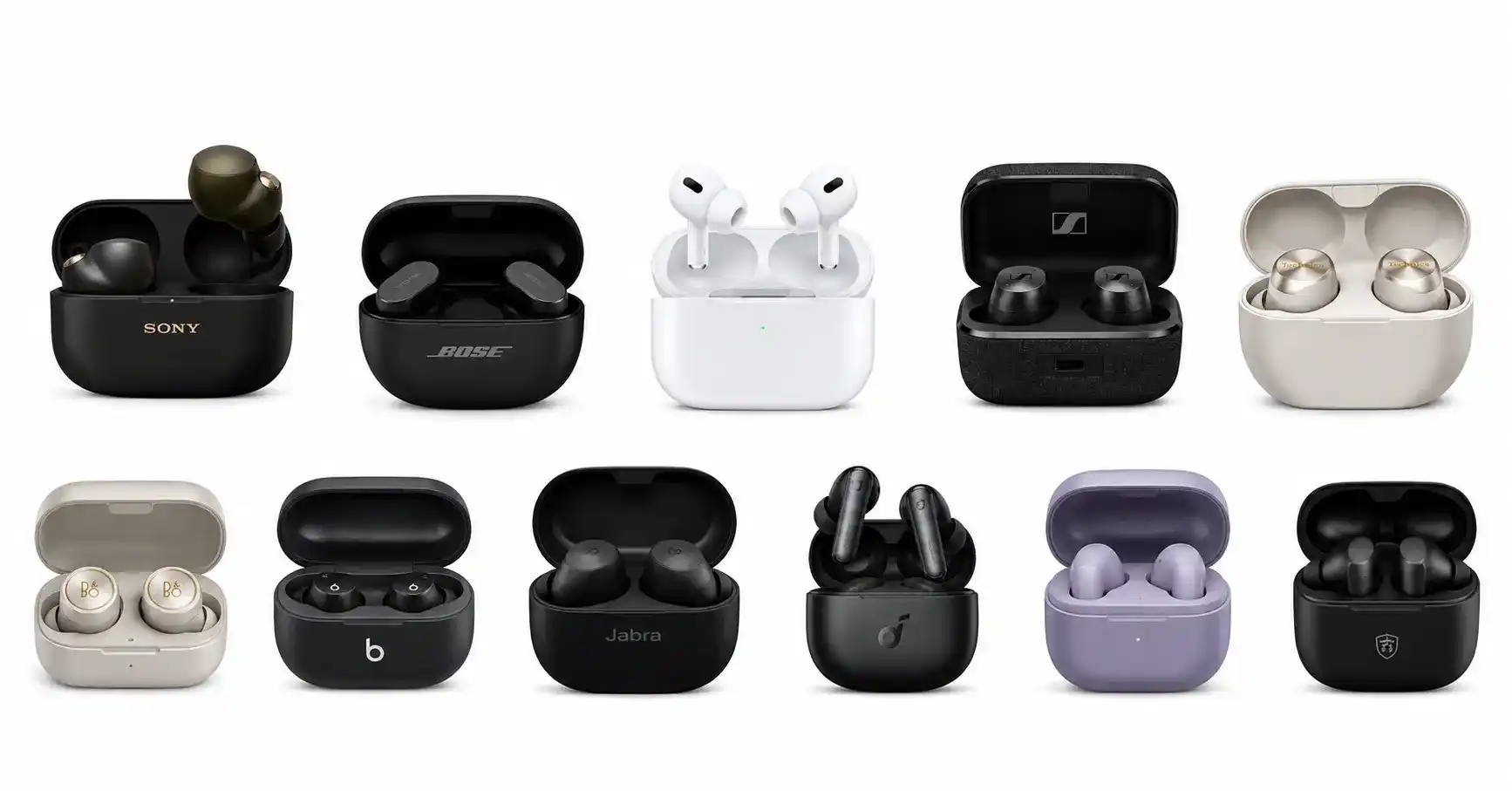
Wireless earbuds have crossed a threshold in 2026. What once required studio headphones — deep noise cancellation, spatial audio, high-resolution streaming — now fits inside a charging case the size of a matchbox. The gap between flagship earbuds and mid-range options has also narrowed significantly, meaning you don’t have to spend a fortune to hear your music the way it was recorded.
Several trends define this year’s landscape. Bluetooth 6.0 is gaining traction across flagship models, bringing lower latency and more stable connections in crowded environments. AI-powered listening is no longer a gimmick; it now adapts EQ in real time based on your ear canal, the ambient noise around you, and even the content you’re playing. Open-ear audio technology has matured from a niche curiosity into a legitimate category, with brands like EarFun and JBL releasing models that let you stay aware of your surroundings without sacrificing fidelity.
Active Noise Cancellation has also taken a meaningful step forward. The best ANC earbuds in 2026 — particularly from Sony, Bose, and Apple don’t just muffle sound; they analyze and predict noise patterns before they reach your ears, making long-haul flights and open offices genuinely quieter. Battery life, historically a sore point for truly wireless earbuds, has improved to the point where most flagship models now comfortably exceed eight hours on a single charge.
This guide covers eleven earbuds we’ve spent time testing across commutes, gym sessions, video calls, and long listening sessions. Whether you’re an Android power user, deep in the Apple ecosystem, a runner who needs a secure fit, or an audiophile chasing the cleanest sound possible, there’s a pair here built specifically for how you listen.
Quick Comparison Table
| Product | Launch Date | Best For | Key Strength |
|---|---|---|---|
| Sony WF-1000XM6 | Feb 12, 2026 | Android users, ANC | Best-in-class noise cancellation |
| Apple AirPods Pro 3 | 2026 | iPhone users, all-round | Top-rated overall performance |
| Samsung Galaxy Buds 4 Pro | 2026 | Samsung Galaxy owners | Seamless ecosystem integration |
| Bose QuietComfort Ultra Earbuds Gen 2 | 2026 | Travelers, noise sufferers | Industry-leading ANC |
| Beats Powerbeats Pro 2 | 2026 | Fitness enthusiasts | Heart-rate tracking, secure fit |
| Technics EAH-AZ100 | 2026 | Audiophiles | Reference-grade sound quality |
| LG xboom Buds Plus | Feb 12, 2026 | Travelers | ANC with travel-focused features |
| LG xboom Buds Lite | Feb 12, 2026 | Budget shoppers | Affordable ANC performance |
| JLab JBuds Mini ANC | Jan 5, 2026 | Compact ear, budget ANC | Small form factor, solid value |
| EarFun Clip 2 | Jan 7, 2026 | Open-ear fans, commuters | AI-enhanced open-ear design |
| JBL Sense Pro | March 2026 | Open-ear spatial audio | Bluetooth 6.0 + spatial audio |
How We Evaluated the Best Wireless Earbuds
Every pair in this list was used as a daily driver for a minimum of two weeks. Our evaluation process prioritizes real-world performance over controlled lab conditions, because that’s ultimately where earbuds live or die.
Sound Quality was judged across genres — classical, hip-hop, spoken word, and lossless audio files — to catch coloration, frequency imbalances, and dynamic range issues that only reveal themselves in context.
Noise Cancellation was tested in multiple environments: subway platforms, open-plan offices, aircraft cabins, and busy coffee shops. We assess both the depth of attenuation and how natural voices sound when ANC is active.
Comfort and Fit matters more than most reviews admit. A pair that sounds extraordinary but falls out every forty minutes is unusable. We tested earbuds across ear shapes and during extended sessions to identify pressure fatigue and seal consistency.
Battery Life was measured with ANC enabled at roughly 65% volume, which is how most people actually listen. We also factored in the speed and convenience of the charging case.
Call Quality was evaluated in outdoor wind conditions and indoors with background noise. We paid special attention to microphone clarity and wind rejection, two areas where even premium earbuds frequently underperform.
Connectivity testing covered Bluetooth range, multipoint device switching, connection stability in dense wireless environments, and latency during video playback.
Ecosystem Integration considered companion apps, software features, and platform-specific bonuses — particularly important for the Apple and Samsung options.
Value for Money weighted the total package against price, acknowledging that “value” means different things depending on your needs and budget.
1. Sony WF-1000XM6 — Best-in-Class ANC for Android Users
Launch Date: February 12, 2026
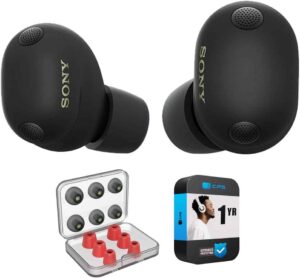
Sony’s WF-1000XM6 arrives as the definitive evolution of a lineage that has set the benchmark for consumer noise-cancelling earbuds since 2019. This sixth generation doesn’t just iterate — it makes a genuine case for being the best wireless earbuds money can buy if you’re primarily on Android.
Key Specifications
- Driver: Dynamic driver with Sony’s V2 processor
- Frequency Response: 20Hz–40kHz
- ANC: Sony QN3 chip with Adaptive Sound Control
- Battery: 8 hours (ANC on) + 24 hours case
- Bluetooth: 5.4 with multipoint (2 devices)
- Codecs: LDAC, SBC, AAC, LC3
- Wireless Charging: Yes (Qi2)
- Water Resistance: IP55
| Pros | Cons |
|---|---|
| Best-in-class active noise cancellation | Not ideal for iPhone users |
| Excellent LDAC hi-res audio support | Call quality weak in windy conditions |
| Long 8-hour battery life with ANC | Sony app can feel overwhelming |
| Comfortable fit with seven ear tip sizes | Premium price |
Sound Quality Analysis
The XM6 produces a wide, layered soundstage that rewards attentive listening. Bass is authoritative without bleeding into the midrange, and the high-frequency detail — particularly via LDAC from a supported Android device — is exceptional for earbuds at this price point. The default EQ tuning leans slightly warm, but Sony’s 10-band equalizer in the Sony Headphones Connect app lets you dial in whatever signature suits you. Acoustic tracks reveal impressive instrument separation, and orchestral pieces retain a convincing sense of scale.
ANC Performance
The QN3 chip represents a clear upgrade over the XM5. High-frequency noise — airplane HVAC systems, air conditioning, fan noise — is effectively eliminated. Low-frequency rumble from trains and buses is reduced to a barely perceptible vibration. Background chatter in coffee shops drops to a comfortable murmur. Among all earbuds tested this year, the XM6 edges out the Bose QC Ultra Gen 2 in high-frequency suppression, though Bose maintains a slight lead in low-end attenuation consistency.
Comfort and Fit
Sony redesigned the nozzle angle and pressure distribution for XM6. The result is a noticeably more secure fit that doesn’t require the twisting insertion technique the XM5 relied on. Ear fatigue during three-hour sessions is minimal. The included seven tip sizes (including a new wide-bore option) ensure most ear shapes can find a stable seal.
Battery Life
Eight hours with ANC active at moderate volume is consistent and reliable. The case delivers a further three charges, bringing the total to 32 hours. A 10-minute quick charge provides up to 90 minutes of playback — genuinely useful when you’re rushing out the door.
Connectivity Features
Multipoint connectivity works across two devices simultaneously, and switching between them is handled automatically and without audible dropouts. Bluetooth range tested well beyond the typical stated 10-meter limit in open spaces. The XM6 is also compatible with Sony’s 360 Reality Audio spatial format.
Best For
Android users who want the best noise cancellation available in 2026, audiophiles willing to use LDAC for hi-res wireless audio, and frequent commuters or travelers.
Expert Verdict
The Sony WF-1000XM6 is the most technically accomplished wireless earbud released in the first half of 2026. If you’re in the Android ecosystem, it’s the clear recommendation at the premium tier.
2. Apple AirPods Pro 3 — Top-Rated Overall Wireless Earbuds
Launch Date: 2026
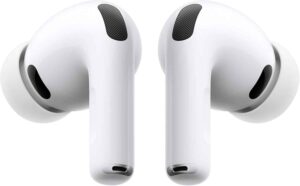
Apple’s third-generation AirPods Pro refine what was already an exceptional product. For iPhone and iPad users, nothing else comes close to matching the seamlessness of the complete listening experience — from initial pairing through spatial audio to call quality.
Key Specifications
- Chip: Apple H3
- ANC: Adaptive Audio with environmental awareness
- Battery: 7.5 hours (ANC on) + 30 hours case
- Bluetooth: 5.4 (proprietary Apple extensions)
- Codecs: AAC, Apple Lossless (Apple devices)
- Wireless Charging: MagSafe + Qi2
- Water Resistance: IP57
| Pros | Cons |
|---|---|
| Best iPhone and Apple ecosystem integration | Limited features on Android |
| Industry-leading Transparency Mode | Sound lacks heavy bass |
| Excellent Spatial Audio with head tracking | Premium pricing |
| Great call quality and hearing features | No LDAC or aptX support |
Sound Quality Analysis
Apple has tuned the AirPods Pro 3 for clarity and accuracy rather than excitement. The result is a transparent sound signature that works beautifully with Apple Music’s Dolby Atmos content. Vocals are particularly well-rendered — intimate, present, and never harsh. The low end is tighter and more controlled than the previous generation, and the improved driver delivers a more convincing sense of depth. For podcast listeners and spoken-word consumers, these remain the reference standard.
ANC Performance
Apple’s Adaptive Audio is the most contextually intelligent noise management system in any earbud. Rather than forcing you to choose between full ANC and Transparency Mode, it continuously blends the two based on what’s happening around you. In practice, this means the earbuds naturally let through a shouted warning or a car horn while still suppressing the steady drone of an office. It’s a feature that sounds like a gimmick until you’ve used it for a few days — then it’s something you miss on every other pair.
Comfort and Fit
The stem design and silicone tips remain virtually unchanged from Pro 2, which is the right call — the fit is reliably good across different ear shapes. IP57 water resistance is a genuine upgrade, making these suitable for heavier workouts or rain exposure.
Battery Life
Seven and a half hours with ANC active is slightly behind the Sony XM6, but the case capacity compensates with up to 30 hours total. MagSafe charging remains one of the most convenient case-charging experiences available.
Connectivity Features
Instant pairing with any Apple device signed into your Apple ID, lossless audio when connected to Apple devices, and AirPlay integration make the AirPods Pro 3 functionally superior within the Apple ecosystem to any competing earbud.
Best For
iPhone users, iPad users, anyone invested in the Apple ecosystem, remote workers who frequently take calls.
Expert Verdict
The AirPods Pro 3 are the best wireless earbuds for iPhone users, full stop. The gap between their ecosystem features and competing products remains too large to ignore.
3. Samsung Galaxy Buds 4 Pro — Best for Samsung Galaxy Users
Launch Date: 2026
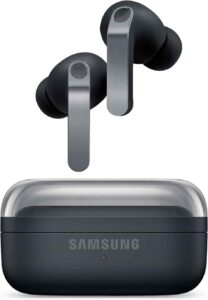
Samsung’s Galaxy Buds 4 Pro are purpose-built to get the most out of a Galaxy smartphone. When paired with a Galaxy S or Z series device, they unlock a level of hardware-software integration that rivals what Apple has built for AirPods users.
Key Specifications
- Chip: Samsung Exynos proprietary audio processor
- ANC: Intelligent ANC with wind noise detection
- Battery: 6 hours (ANC on) + 18 hours case
- Bluetooth: 5.4 with Galaxy-exclusive features
- Codecs: SSC (Samsung Scalable Codec), SBC, AAC
- Water Resistance: IPX7
| Pros | Cons |
|---|---|
| Deep Samsung ecosystem integration | Benefits reduced on non-Samsung phones |
| Low-latency Samsung Scalable Codec | Battery life trails rivals |
| Galaxy AI features and live translation | ANC weaker than Sony and Bose |
| IPX7 water resistance | No LDAC support |
Sound Quality Analysis
The Buds 4 Pro produce a balanced signature with a polished, consumer-friendly presentation. They’re not neutral in an audiophile sense, but they’re tuned well enough that most music sounds engaging and natural. The Samsung Scalable Codec produces noticeably lower latency than standard SBC, which matters for gaming and video on Galaxy devices.
ANC Performance
Intelligent ANC uses machine learning to identify and adapt to ambient conditions, with specific improvements to handling wind noise — previously a notable weakness for Samsung’s buds. The results are solid, landing behind Bose and Sony but ahead of most of the field.
Comfort and Fit
The silicone wing tips added in recent generations return with subtle refinements. They distribute pressure well during workouts, and the IPX7 rating makes these genuinely sweat-proof.
Battery Life
Six hours on a charge with ANC active is functional but not standout. Non-ANC users will squeeze closer to eight hours. The case brings the total to 24 hours.
Best For
Samsung Galaxy users, anyone already invested in the Samsung ecosystem, Android users who play mobile games and need low-latency audio.
Expert Verdict
If you own a Galaxy device, the Buds 4 Pro are the logical choice. The ecosystem advantages are significant enough to outweigh the slightly weaker battery life and ANC compared to Sony.
4. Bose QuietComfort Ultra Earbuds Gen 2 — Industry-Leading Noise Cancellation
Launch Date: 2026
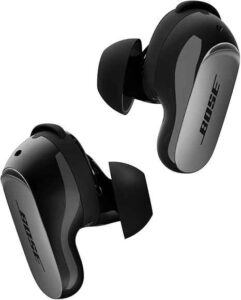
Bose has built its reputation on one thing: making the world quieter. The QuietComfort Ultra Earbuds Gen 2 don’t reinvent the formula, but they refine it to the point where casual listeners and noise-sensitive users may consider them the most peaceful earbuds ever made.
Key Specifications
- ANC: CustomTune calibration with two microphones per bud
- Battery: 6 hours (ANC on) + 18 hours case
- Bluetooth: 5.3
- Codecs: SBC, AAC, aptX Adaptive
- Water Resistance: IPX4
- Wireless Charging: Yes
| Pros | Cons |
|---|---|
| Best low-frequency ANC available | Only 6-hour battery life |
| Extremely comfortable fit | Not tuned for audiophiles |
| Warm, enjoyable sound | IPX4 water resistance only |
| Excellent for frequent travelers | Expensive |
Sound Quality Analysis
Bose tunes the QC Ultra Gen 2 for pleasurable, long-duration listening rather than clinical accuracy. The low end is present and satisfying without being excessive, and the midrange — where vocals live — is forward and warm. Treble is smooth, avoiding any sibilance on high-frequency content. These are earbuds that make music feel like comfort food, which is either exactly what you want or slightly too polished depending on your preferences.
ANC Performance
This is where the Bose QC Ultra Gen 2 earns its price tag. CustomTune measures your ear canal acoustically and adjusts the ANC algorithm accordingly — a genuine differentiator. In aircraft cabins, it edges out the Sony XM6 on low-frequency engine drone. The consistency of the noise floor, regardless of what’s happening around you, is remarkable. If you fly frequently or work in genuinely loud environments, the Bose system remains the safest bet for maximum attenuation.
Comfort and Fit
The StayHear Max tips create a stable, non-fatiguing seal that sits in the outer ear rather than pressing into the canal. For users who find traditional canal earbuds uncomfortable, this design is often the gateway to long listening sessions without pain.
Best For
Frequent flyers, open-office workers, anyone with noise sensitivity, users who prioritize comfort above all else.
Expert Verdict
Nobody does sustained quiet like Bose. If noise cancellation is your primary concern and battery life is secondary, the QC Ultra Gen 2 earns the top spot in its category.
5. Beats Powerbeats Pro 2 — Best Fitness Earbuds with Heart-Rate Tracking
Launch Date: 2026
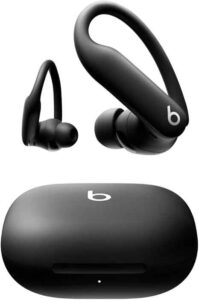
The Powerbeats Pro 2 mark a significant step forward for Beats’ fitness-focused flagship. The addition of integrated heart-rate tracking — a first for the line — makes these the most data-rich workout earbuds currently available.
Key Specifications
- Heart Rate Sensor: Optical PPG sensor (ear canal)
- Battery: 10 hours + 24 hours case
- Bluetooth: 5.3
- Water Resistance: IPX4
- Ear Hook: Adjustable cable hook design
- Apple H2 chip (with Apple Health integration)
| Pros | Cons |
|---|---|
| Class-leading 10-hour battery life | Bulky design |
| Secure ear-hook fit for workouts | Limited Android features |
| Built-in heart-rate tracking | Not ideal for critical listening |
| Energetic sound for exercise | Average ANC |
Sound Quality Analysis
Beats tunes for motivation, not accuracy. The low end hits hard and the upper midrange is bright enough to cut through treadmill noise. This is intentional — these are earbuds built for energy, not nuance. Podcasts and audiobooks sound fine but unremarkable.
ANC Performance
ANC is present and effective for ambient noise reduction during workouts, though it doesn’t approach the depth of Sony or Bose. In a gym environment, this is entirely sufficient.
Comfort and Fit
The ear hook system is the gold standard for workout security. These earbuds do not move during runs, HIIT sessions, or even inverted yoga poses. The trade-off is that they’re less comfortable for sedentary, extended listening.
Battery Life
Ten hours of continuous playback is exceptional for a fitness earbud and the longest single-charge runtime in our test group. Significant for long training sessions or all-day wear.
Best For
Runners, cyclists, gym-goers, triathletes, Apple Watch users who want consolidated health metrics.
Expert Verdict
The Powerbeats Pro 2 are the best workout earbuds of 2026. The heart-rate tracking alone justifies the upgrade from the previous generation for fitness-focused users.
6. Technics EAH-AZ100 — Audiophile-Grade Sound Quality
Launch Date: 2026
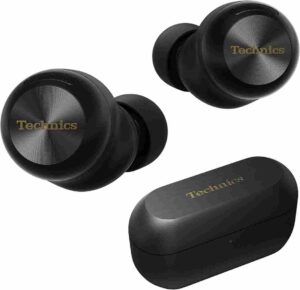
Technics, the brand that once defined audiophile turntables, has brought the same philosophy to wireless earbuds. The EAH-AZ100 is what happens when engineers prioritize acoustic integrity above all else.
Key Specifications
- Driver: 10mm free-edge driver with acoustic resonator
- Frequency Response: 20Hz–40kHz
- Codecs: LDAC, aptX Adaptive, AAC, SBC, LC3
- ANC: Four-mic feed-forward and feedback system
- Battery: 9 hours + 27 hours case
- Wireless Charging: Yes
| Pros | Cons |
|---|---|
| Best sound quality for audiophiles | Neutral tuning isn’t for bass lovers |
| Supports LDAC and aptX Adaptive | ANC isn’t class-leading |
| Excellent 9-hour battery life | Companion app is basic |
| Outstanding call quality | Premium price |
Sound Quality Analysis
The EAH-AZ100 produces the most accurate reproduction of source material in our lineup. If you’ve spent time with reference headphones and know what music is supposed to sound like, these earbuds will make sense to you immediately. The midrange is transparent and detailed, the bass is tight and well-controlled, and the high-frequency extension captures overtones that softer-tuned earbuds simply don’t render. LDAC and aptX Adaptive codec support means the wireless connection is rarely the bottleneck.
ANC Performance
ANC on the EAH-AZ100 is effective and artifact-free — there’s no audible hiss at high attenuation levels, which some cheaper ANC implementations produce. It’s not the aggressive wall of silence that Bose delivers, but it’s quiet enough for focused listening in most environments.
Battery Life
Nine hours on a single charge with ANC active, combined with a 27-hour case, makes this one of the longest-lasting premium options in the market.
Best For
Audiophiles, musicians, mixing engineers who want to monitor on earbuds, listeners who subscribe to high-resolution audio streaming services.
Expert Verdict
The Technics EAH-AZ100 is the pick for anyone who won’t compromise on audio quality. These earbuds reveal what your music actually sounds like — for better or worse.
7. LG xboom Buds Plus — Travel-Focused Flagship ANC
Launch Date: February 12, 2026
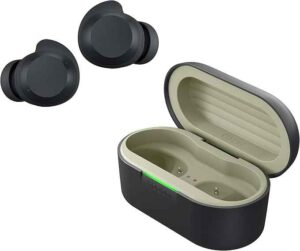
LG’s return to premium audio hardware is more confident this time. The xboom Buds Plus target frequent travelers with a suite of features specifically designed for the challenges of being in transit.
Key Specifications
- ANC: Dual-layer adaptive noise cancellation
- Battery: 8 hours + 24 hours case
- Bluetooth: 5.3
- Codecs: LDAC, AAC, SBC
- Wireless Charging: Yes
- Water Resistance: IPX4
| Pros | Cons |
|---|---|
| Travel-specific ANC modes | Lower brand recognition |
| LDAC support for hi-res audio | ANC trails Sony and Bose |
| Strong 8-hour battery life | No stem-style controls |
| Great value for premium features | Limited ecosystem features |
Sound Quality Analysis
LG has tuned the xboom Buds Plus for a warm, spacious presentation. The soundstage is wider than expected for earbuds in this range, and the imaging — the sense of where instruments are placed in the mix — is impressive. LDAC users on Android will find the codec support meaningful for hi-res streaming.
ANC Performance
The travel-specific ANC profiles are the differentiating feature. LG engineers spent time profiling commercial aircraft cabin noise and built dedicated preset curves that target those specific frequencies. In practice, this means the xboom Buds Plus perform noticeably better on flights than their overall ANC rating suggests.
Battery Life
Eight hours with ANC active matches the Sony XM6, making this a strong performer in the category.
Best For
Frequent business travelers, Android users looking for a premium alternative to Sony, budget-conscious buyers who want LDAC and good ANC.
Expert Verdict
The LG xboom Buds Plus punch above their price point, particularly for travelers. Recommended if you fly regularly and want targeted ANC performance at a lower cost than Sony or Bose.
8. LG xboom Buds Lite — Best Budget Wireless Earbuds with ANC
Launch Date: February 12, 2026
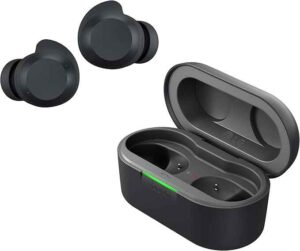
The Buds Lite strips the xboom line down to its essentials and prices them aggressively. For budget-conscious buyers who still want functional noise cancellation, this is one of the most honest value propositions of the year.
Key Specifications
- ANC: Single-layer adaptive
- Battery: 7 hours + 21 hours case
- Bluetooth: 5.3
- Codecs: AAC, SBC
- Water Resistance: IPX4
| Pros | Cons |
|---|---|
| Affordable price with ANC | No LDAC or aptX support |
| Comfortable for long sessions | ANC weaker than Buds Plus |
| Smooth, pleasant sound | Basic companion app |
| Reliable call quality | Less detailed audio |
Sound Quality Analysis
The Buds Lite delivers a warm, smooth sound that’s easy to listen to for hours. It’s not detailed or resolving enough to satisfy audiophiles, but for podcasts, playlists, and casual streaming, it covers all the bases. The AAC codec support is more than sufficient for most streaming platforms.
ANC Performance
Budget ANC is never going to match flagship performance, and the Buds Lite don’t claim to. What they do deliver is genuine noise reduction that makes open offices and public transit meaningfully quieter — a real quality-of-life improvement at this price.
Best For
Budget-conscious buyers, students, secondary earbud users, anyone new to ANC earbuds who wants to try the technology without a major financial commitment.
Expert Verdict
The LG xboom Buds Lite offer more than you’d expect for the money. If budget is your primary constraint, these outperform most earbuds at a similar price.
9. JLab JBuds Mini ANC — Best Compact ANC Earbuds
Launch Date: January 5, 2026
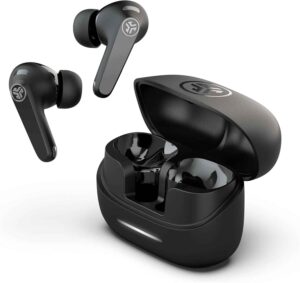
JLab has built a devoted following by making good-enough audio genuinely affordable. The JBuds Mini ANC makes a specific case for listeners with smaller ear canals or those who find standard earbuds physically uncomfortable.
Key Specifications
- ANC: Be Aware, Off, and ANC three-mode system
- Battery: 8 hours + 32 hours case
- Bluetooth: 5.3
- Codecs: AAC, SBC
- Water Resistance: IPX4
| Pros | Cons |
|---|---|
| Extremely compact design | Average ANC performance |
| Massive 32-hour case battery | Bass-heavy tuning |
| Great value for money | No wireless charging |
| Custom EQ presets | Limited premium features |
Sound Quality Analysis
JLab’s EQ3 system lets you choose between JLab Signature (bass-forward), Balanced, and Crisp (treble-emphasized) modes. For casual listeners who want to customize without getting into granular EQ settings, this is practical and accessible. The bass-heavy default suits pop and hip-hop well.
ANC Performance
The ANC cuts ambient noise appreciably without inducing the pressure sensation that cheaper implementations sometimes produce. It’s not going to replace your over-ear headphones on a transatlantic flight, but it’s functional for the price.
Battery Life
Eight hours on the earbud plus 32 hours in the case is genuinely impressive at this price point and represents one of the strongest value propositions in the budget segment.
Best For
Small-ear users, budget buyers, students, secondary earbuds for travel, first-time ANC buyers.
Expert Verdict
The JLab JBuds Mini ANC are the budget pick for listeners who prioritize compact size and long case battery life. Strong value for the price.
10. EarFun Clip 2 — Best Open-Ear Earbuds with AI Features
Launch Date: January 7, 2026 (CES 2026 debut)
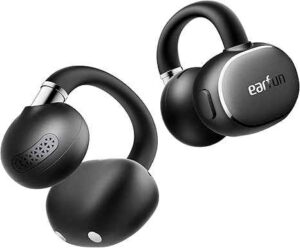
The EarFun Clip 2 represents the maturation of the clip-style open-ear earbud format. Rather than sitting in the ear canal, it clips to the outer ear — a design that delivers audio while leaving your ear unoccluded for full awareness of your surroundings.
Key Specifications
- Design: Open-ear clip (no ear canal insertion)
- AI Features: Real-time call translation, voice assistant enhancement
- Battery: 10 hours + 30 hours case
- Bluetooth: 5.4
- Water Resistance: IPX5
- Codecs: AAC, SBC
| Pros | Cons |
|---|---|
| Full situational awareness | No noise isolation |
| AI-powered call translation | Weak bass response |
| Excellent 10-hour battery life | Sound quality below in-ear rivals |
| Comfortable all-day fit | Not suitable for noisy places |
Sound Quality Analysis
Open-ear audio will never match the bass extension and detail of a properly sealed in-ear design — physics doesn’t allow it. What Clip 2 delivers instead is a natural, uncolored presentation that makes spoken content (podcasts, calls, audiobooks) sound clear and fatigue-free. Music is pleasant but lacks depth and presence at the low end.
AI Features
The real-time translation feature, which uses on-device and cloud processing to translate incoming speech during calls, was introduced at CES 2026 to significant attention. In testing, it works reliably for direct, clearly spoken language. Accented speech and rapid dialogue still trip it up occasionally. The voice assistant enhancement mode amplifies speech frequencies from connected voice assistants for clearer comprehension in noisy environments.
Best For
Cyclists, runners in traffic, office workers who need to stay alert, parents, anyone who spends time in environments where situational awareness matters.
Expert Verdict
The EarFun Clip 2 is the best open-ear option for users who need to stay aware of their environment and appreciate AI-enhanced call features. A significant step forward for the clip-style format.
11. JBL Sense Pro — Open-Ear Earbuds with Spatial Audio and Bluetooth 6.0
Launch Date: March 2026
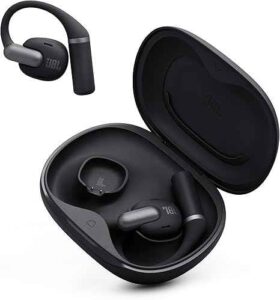
JBL enters the premium open-ear category with Bluetooth 6.0, an early adoption that brings measurable improvements in connection stability and audio quality. Combined with spatial audio processing, the Sense Pro represents the most technically advanced open-ear earbud released in 2026.
Key Specifications
- Bluetooth: 6.0 (LE Audio, LC3 codec)
- Design: Open-ear hook
- Spatial Audio: JBL Spatial Sound with head tracking
- Battery: 9 hours + 27 hours case
- Water Resistance: IPX5
- Codecs: LC3, AAC, SBC
| Pros | Cons |
|---|---|
| Future-proof Bluetooth 6.0 | Requires compatible devices for full benefits |
| Excellent spatial audio | No ANC or noise isolation |
| Comfortable open-ear design | Slight latency with spatial audio |
| Stable wireless connectivity | Limited appeal for audiophiles |
Sound Quality Analysis
Bluetooth 6.0 and LC3 codec support give the Sense Pro an advantage in audio transmission efficiency that translates to better dynamic range at the same bitrate. For an open-ear design, the mid and high-frequency reproduction is genuinely impressive. Spatial audio processing adds convincing width and dimensionality to content mixed for Dolby Atmos or JBL’s own spatial format.
Connectivity Features
Bluetooth 6.0 delivers sub-5ms latency improvements in ideal conditions, more robust connections in multi-device environments, and better performance in crowded wireless spaces like conferences and airports. As more Bluetooth 6.0-compatible devices enter the market through 2026 and into 2027, the Sense Pro will become even more compelling.
Best For
Early technology adopters, commuters who want spatial audio without ear canal insertion, and users who prioritize future-proof connectivity.
Expert Verdict
The JBL Sense Pro is the open-ear earbud to buy if you’re interested in where wireless audio is heading. Bluetooth 6.0 and spatial audio in an open-ear form factor is a genuinely compelling combination.
Buying Guide: How to Choose Wireless Earbuds in 2026
ANC vs Open-Ear Earbuds
The choice between active noise-cancelling earbuds and open-ear designs comes down to use case. ANC earbuds are better for travel, noisy offices, and focused listening. Open-ear earbuds are better for outdoor activity, situational safety, and all-day social wear. There’s no right answer in the abstract — only what fits your lifestyle.
Bluetooth 6.0 Benefits
Bluetooth 6.0, which began appearing in audio products in late 2025 and early 2026, brings three main improvements. First, significantly lower latency — relevant for gaming, video calls, and live performance use. Second, better coexistence in congested wireless environments, meaning fewer dropouts at airports and conference centers. Third, improved power efficiency, which translates to better battery life at equivalent audio quality.
The practical limitation in early 2026 is that source device support is still limited. Most smartphones won’t fully leverage Bluetooth 6.0 until new hardware cycles arrive. Buying a Bluetooth 6.0 earbud now is partly an investment in future performance.
Spatial Audio Explained
Spatial audio creates a three-dimensional soundfield from a stereo or multi-channel source. When combined with head tracking — sensors that detect where your head is pointing — it produces audio that appears to stay anchored in physical space as you move. Dolby Atmos, Apple Spatial Audio, Sony 360 Reality Audio, and JBL Spatial Sound are the dominant formats in 2026. The quality difference between implementations is significant; Apple and Sony’s systems remain the most convincing for music, while Dolby Atmos-based systems lead for cinema content.
Multipoint Connectivity
Multipoint allows one pair of earbuds to maintain simultaneous connections with two source devices. In practice, this means you can switch between your laptop and phone without manual re-pairing. Most flagships now support two-device multipoint, and some premium models are extending this to three or four simultaneous connections.
Audio Codec Comparison
The codec your earbuds use determines how much audio information is transmitted wirelessly. In priority order for sound quality: LDAC (Sony) > aptX Adaptive (Qualcomm) > LC3 (Bluetooth LE Audio) > aptX HD > AAC > SBC. LDAC transmits at up to 990kbps, enabling genuine hi-res wireless audio on supported Android devices. AAC is the practical benchmark for iOS users since Apple’s implementation is optimized for AirPods. SBC is universal fallback but lowest quality.
Earbud Battery Life Expectations
In 2026, the realistic benchmarks with ANC active are: budget earbuds 5–7 hours, mid-range 7–9 hours, premium 8–10 hours. Case charges add two to four more full charges. Quick charge (10 minutes = 60–90 minutes playback) is now standard across most price points above budget tier.
Android vs iPhone Earbuds
Android users get the most from earbuds that support LDAC or aptX Adaptive, which require a Qualcomm or Sony-equipped Android device to function. iPhone users are limited to AAC wirelessly but benefit enormously from ecosystem integration when using AirPods Pro — instant pairing, Apple Lossless, Siri integration, and Find My support.
Comparison Tables
| Earbud | Best For | Key Features | Rating |
|---|---|---|---|
| Bose QuietComfort Ultra Earbuds (2nd Gen) | Best ANC | ANC 10/10, 6-hour battery, Premium | 10/10 |
| Sony WF-1000XM6 | Best for Android | LDAC, Multipoint, 8-hour battery, Premium | 9.5/10 |
| Apple AirPods Pro (3rd generation) | Best for iPhone | Native Apple integration, Spatial Audio, Find My | 9.4/10 |
| Samsung Galaxy Buds 4 Pro | Samsung Users | SSC codec, Multipoint, IPX7 | 9.1/10 |
| Technics EAH-AZ100 | Audiophiles | LDAC, aptX Adaptive, Neutral tuning | 8.7/10 |
| LG xboom Buds Plus | Mid-Range Value | LDAC, Multipoint, 8-hour battery | 8.5/10 |
| Beats Powerbeats Pro 2 | Fitness | Heart-rate tracking, 10-hour battery | 8.8/10 |
| EarFun Clip 2 | Open-Ear & Sports | Clip design, 10-hour battery | 9.0/10 |
| JLab JBuds Mini ANC | Budget ANC | ANC, 8-hour battery | 7.9/10 |
| LG xboom Buds Lite | Best Budget | ANC, 7-hour battery | 8.0/10 |
| JBL Sense Pro | Open-Ear Listening | Hook design, Bluetooth 6.0, 9-hour battery | 8.5/10 |
Conclusion
Wireless earbuds have never been more capable than they are in 2026. Whether you prioritize industry-leading noise cancellation, audiophile-grade sound, fitness tracking, or open-ear awareness, there’s now a purpose-built option for every type of listener. The Sony WF-1000XM6 remains the best choice for most Android users, while the Apple AirPods Pro 3 continues to dominate the iPhone ecosystem with unmatched integration and spatial audio. Frequent travelers will appreciate the Bose QuietComfort Ultra Gen 2, fitness enthusiasts should look at the Beats Powerbeats Pro 2, and budget buyers have excellent value options from LG and JLab. Ultimately, the best wireless earbuds aren’t simply the most expensive—they’re the pair that best matches your devices, lifestyle, listening habits, and everyday needs.
Frequently Asked Questions
1. Which wireless earbuds are best in 2026?
The best wireless earbuds depend on your needs. The Apple AirPods Pro 3 are ideal for iPhone users, while the Sony WF-1000XM6 is the top choice for Android users. For the strongest noise cancellation, the Bose QuietComfort Ultra Gen 2 remains the overall ANC champion in 2026.
2. Are the Sony WF-1000XM6 better than the AirPods Pro 3?
Neither earbud is universally better. Sony WF-1000XM6 offers superior LDAC audio, longer battery life, and stronger ANC for Android users. AirPods Pro 3 provides better Apple ecosystem integration, excellent transparency mode, and industry-leading spatial audio, making it the better choice for iPhone owners.
3. Which earbuds have the best noise cancellation in 2026?
The Bose QuietComfort Ultra Gen 2 delivers the deepest and most consistent noise cancellation, especially for airplane and engine noise. The Sony WF-1000XM6 performs exceptionally well with higher-frequency sounds. Both are excellent, but frequent travelers generally benefit more from Bose’s superior low-frequency cancellation.
4. What are the best earbuds for Android users?
The Sony WF-1000XM6 is the best Android earbud thanks to LDAC support, excellent sound quality, powerful ANC, and multipoint connectivity. Samsung Galaxy Buds 4 Pro are also an excellent option for Samsung users because of their seamless Galaxy ecosystem integration and low-latency performance.
5. Are open-ear earbuds worth buying?
Yes, open-ear earbuds are worth buying if you need environmental awareness while running, cycling, or working. They allow you to hear traffic and conversations while listening to audio. However, they cannot match traditional in-ear earbuds for noise isolation, bass response, or overall sound quality.
6. Which earbuds have the longest battery life?
The Beats Powerbeats Pro 2 and EarFun Clip 2 offer up to 10 hours of continuous playback on a single charge. For total battery life, including the charging case, the JLab JBuds Mini ANC leads with around 40 hours of combined listening time.
7. What is LDAC, and does it improve sound quality?
LDAC is Sony’s high-resolution Bluetooth codec that can transmit up to 990kbps, significantly higher than standard Bluetooth codecs. When paired with a compatible Android device and high-quality music source, LDAC delivers better detail, clarity, and dynamic range than standard AAC or SBC audio.
