
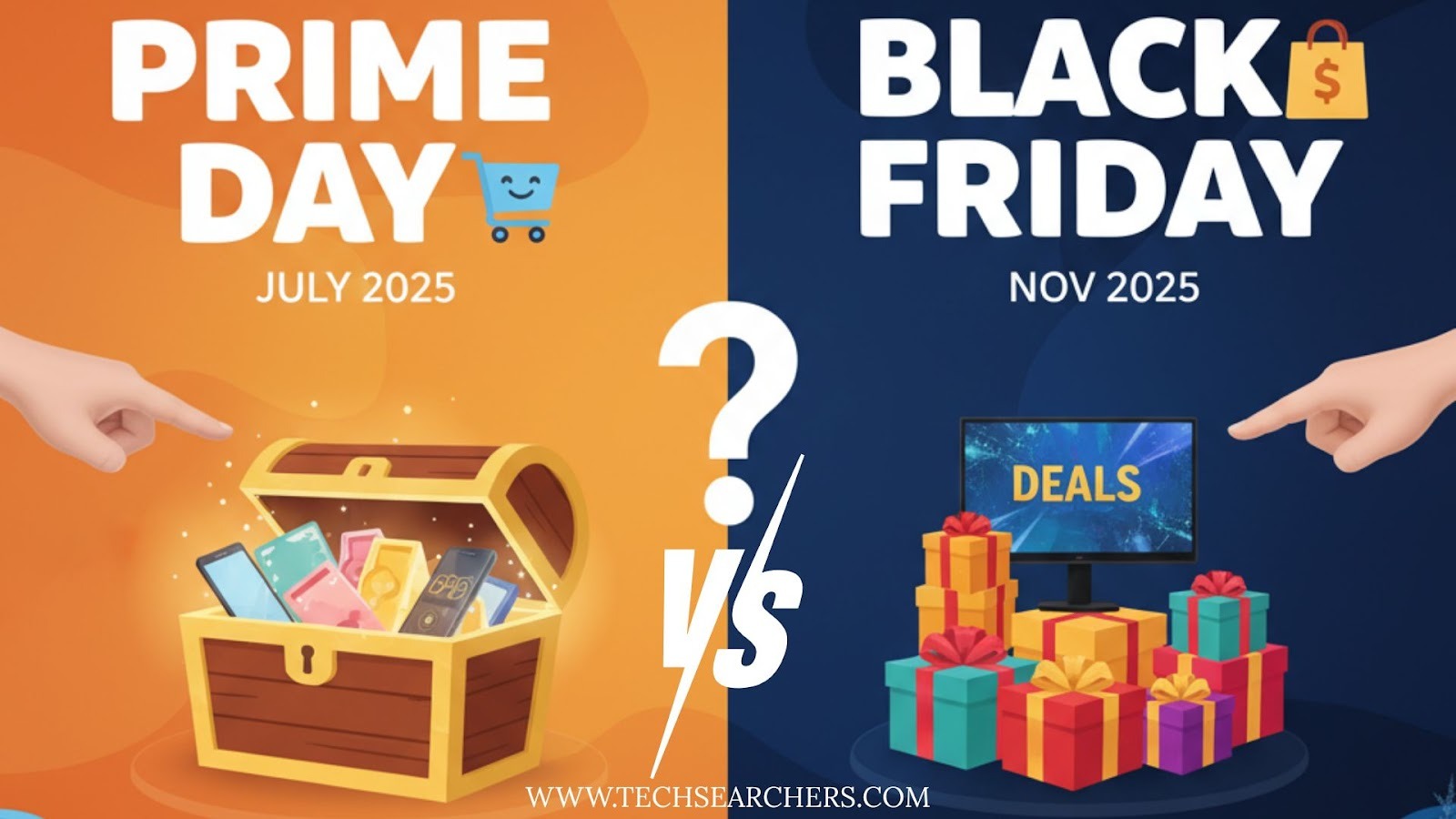
Amazon Prime Day began in 2015 to celebrate Amazon’s anniversary and give Prime members access to exclusive, limited-time deals, typically held in July. In contrast, Black Friday dates back to the 1960s and traditionally marks the start of the holiday shopping season in the U.S., occurring the day after Thanksgiving in November.
Both events promise major discounts across categories like electronics, fashion, beauty, and home goods. Prime Day mainly benefits Amazon shoppers nationwide, while Black Friday brings savings both online and in physical stores across every U.S. state, especially large retail hubs like California, Texas, Florida, and New York.
Understanding when and why these sales happen helps shoppers plan smarter, compare prices effectively, and grab the best deals of the year without overspending.
Prime Day: Amazon’s Member-Exclusive Sale
Prime Day is exclusive to Amazon Prime members, meaning you can’t access deals with a regular Amazon account. However, you can start a free trial to enjoy full benefits, including next-day delivery, Prime Video, and exclusive offers.
The event usually occurs in mid-July, though Amazon has introduced a fall version called Prime Big Deal Days. While you’ll find deals on everything from smart home gadgets to headphones, the biggest savings often appear on Amazon’s own products, like Echo speakers, Fire TV devices, and Kindles.
So, if you’re already a Prime member or plan to try the free trial, Prime Day can be perfect for scoring Amazon-brand tech and bundled offers.
Black Friday: The Global Retail Frenzy
Unlike Prime Day, Black Friday isn’t limited to a single retailer. It’s a worldwide shopping event that follows Thanksgiving in the U.S., falling on November 28, 2025, this year.
What makes Black Friday appealing is its broad retailer participation. You’ll find major discounts from Amazon, Walmart, Best Buy, Target, Currys, and John Lewis, both online and in-store.
The best part? You don’t need any subscription to access these deals. And since many brands extend their discounts into Cyber Monday, shoppers often enjoy nearly two weeks of ongoing offers.
Prime Day vs Black Friday: Key Differences at a Glance
| Factor | Prime Day | Black Friday |
| Availability | Amazon exclusive; requires Prime membership | Open to all shoppers across retailers |
| Timing | Mid-July (plus occasional fall event) | Always the day after U.S. Thanksgiving (Nov 28, 2025) |
| Best For | Amazon devices, tech gadgets, household items | All categories — tech, fashion, home, beauty, etc. |
| Discount Depth | Strong for Amazon-owned products | Broader and often steeper across categories |
| Access | Prime members only (or free trial) | No membership needed |
| Retailer Reach | Only on Amazon | Multi-platform (Amazon, Walmart, Best Buy, Target, etc.) |
Which Has Better Deals: Prime Day or Black Friday?
Both events offer incredible discounts, but the “better” event depends on what you’re shopping for.
- Prime Day tends to deliver record-low prices on Amazon’s own ecosystem — Echos, Kindles, Fire TVs, and Ring devices — and selected tech accessories.
- Black Friday, meanwhile, offers more variety and deeper cross-category discounts, often surpassing Prime Day for brands like Apple, Samsung, Dyson, and Sony.
According to price tracking tools like CamelCamelCamel, both events consistently feature similar all-time-low prices on popular products, but Black Friday’s reach and accessibility give it a slight edge.
Smart Shopper’s Playbook: How to Snag the Best Deals on Prime Day & Black Friday
If you want to save big, it’s not just when you shop, it’s how you shop. Use these smart tactics to make every rupee or dollar count:
1. Set Price Alerts Early
Before either sale starts, use tools like CamelCamelCamel, Honey, or Keepa to monitor price history and get instant alerts when prices drop. This ensures you know whether a “deal” is real or just smart marketing.
2. Compare Across Retailers
Don’t fall for the “Amazon-only” mindset. During Black Friday, cross-check prices on Walmart, Best Buy, Target, or Currys (in the UK). Many retailers price-match or undercut Amazon to compete.
3. Activate Free Prime Trials Wisely
If you’re not a Prime member, start your free trial a day before Prime Day to access deals and free shipping, then cancel afterward if you don’t want to continue. This gives you full access without the ongoing cost.
4. Avoid Panic Buying
Retailers often inflate “original prices” to make discounts look bigger. Use a price tracker to verify the real value, and focus only on items you genuinely need. A true saving isn’t just a lower price; it’s avoiding wasteful spending.
5. Create a Pre-Sale Wishlist
Add your favorite items to an Amazon wishlist or cart before the event. This helps you instantly see which ones drop in price and avoid scrolling fatigue during the sale madness.
Conclusion
The debate of Prime Day vs Black Friday continues to influence global online retail, with Amazon pushing exclusive mid-year deals while Black Friday delivers broader, multi-retailer discounts. Each event shapes consumer behavior differently, depending on timing, product category, and platform reach.
Staying informed is key to smarter decisions. For more tech-driven updates and market insights, visit TechSearchers.
Frequently Asked Questions
Are Prime Day or Black Friday better deals?
It depends on what you’re buying. Prime Day offers the best discounts on Amazon devices and exclusive bundles, while Black Friday brings deeper and wider discounts across multiple retailers and categories.
Is Amazon Prime Day actually cheaper?
For Amazon-owned products like Echo, Kindle, and Fire TV, Prime Day often gives the lowest prices of the year. However, for non-Amazon brands, prices can be similar or even cheaper during Black Friday.
Is Black Friday the cheapest sale of the year?
Yes, generally speaking. Black Friday and Cyber Monday mark the biggest retail price drops of the year, especially for electronics, appliances, and fashion items. Many stores extend these deals across the weekend for extra savings.
